What do I think, What can I do?

Archive for the ‘skeptical about skeptics’ Category

Extreme weather and skepticism

Recently, IPCC launched a special report about extreme weather events (SREX). And the climate blogosphere has reacted, as it should.

Climate Hawks considered it correct but too soft in some senses. Joe Romm says it is a bit outdated regarding some articles, RealClimate does not agree with  one interpretation of statistics.

In the other hand, some climate skeptics have welcomed it effusively ,for example this one in spanish considers it a victory of the science.

This author was based in Piekle Jr blog and has read a different report really, because he considers that the report denies the occurrence of more extreme events in last years due to climate change. It has been one of the most striking examples of cherry picking I have come across last times, and there are many of those (I love this word).

A last example is the vegan blog from which I took the photo. They consider the link established and the occurrence clear. Yes , reading the same report.

I haven’t read it thoroughly but I agree more with the vegans, the report is written in a scientific tone, not a journalist one, but clearly talks about the risks increment due of extreme events.

This is an important battlefield in climate change, extreme events are an important negative consequence of climate change but at the same time are a great driving force for public opinion. Average temperatures are not easy to notice whereas terrible floods or hurricanes or droughts are impossible to forget. Even when they are not scientifically considered a climate change consequence they exert a great effect. Sometimes the science come to us in unexpected ways. For these reasons we will continue to discuss about them.

And painfully to suffer them unless we change our emissions path fast.
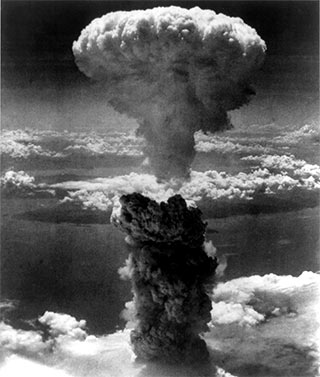
Climate Wars: The war on books.

This battle is not a real battle as the stolen email case (climategates vs. Herathland institute). It is
a different fight mostly dialectic but a fight after all. It is about books. One month ago a german book was considered a great success in skeptic blogs: Die Kalte Sonne. Two were the main reasons for skeptic joy, one of the authors had been an important environmentalist in Germany and the book was quite successful in Amazon Germany, at least before selling. Climate Hawks did not mention this too much except the answer in SKS, explaining the links of the author with energy industry and the mistakes contained in the book.

A bit later the most mentioned climatologists Michael Mann published a book about climate science and its wars. This book was harshly criticized by most famous skeptic blog WUWT as it uses to be anything Mann does. But this campaign reached again Amazon (definitively a battlefield) following the WUWT recommendation to vote it negatively. The defense came from Joe Romm in a nice to read post thinking about Amazons review system but at the same time taking care about ethics limits. In my opinion contrary to the emails one, this was a victorious battle, at least in the weapon choice. I bought Mann’s book for Kindle (I hope to read it someday).

At the same time this kind of books are not only interesting for their readers, the presentation of the book is a great opportunity for general media to remember climate change and say something meaningful and more effective than the book itself (I really have to put it in this year full list). And maybe someone will be interested enough to read it and get more conscious of climate change challenges.

Climate Wars: stolen emails

War , source: libcom.org

The discussion about climate change has many fronts. Last week one of the main issues was the stolen emails from Heartland Institute. It was in fact a kind of answer to the previous climategate1 and climategate2. The climategates were a series of emails stolen to East Anglia University climate scientists that skeptic blogs considered were probing the climate change failure. They just show discussion and reasonable doubt about climatologists and all the ingestisgations have found them no-gilty of fraud. The responsible of the theft is unkonwn.

In this last case, the Heartland Institute is a skeptic institution and the stolen emails show what was easy to suppose, that they are founded by big companies close to fossil fuels. There is a strong arguing about the veracity of one of the documents but everybody accepts that most are real. However, one of the main differences was that in this case the author of the theft has revealed himself and it is a known scientists and climate activist, Gleick.

The skeptic blogs have not stopped to mention this issue once and again, to say they knew it, to show that this probes climate science is a fake, to say that many others are like him,… Just a simple data, in the 6 days from February the 20th to February 26th it is the main topic for 20 posts in WUWT. More than 3 per day, I would not be able to make even 3!!! Really prolific. The rest of skeptic blogosphere follows the same behavior of course. In climate hawks blogosphere it is mentioned and even source of discussions between David Appell and Joe Romm.

One curious aspect is that Heartland Institute was very active using climategate emails to criticize many scientists, while now it is claiming that stolen emails should not be used against themand even send strong emails to many bloggers. The letter of many of the climatologists explaining this contradiction in first person is one of the few positive things of all this issue.

Because stealing those emails has not revealed too many new things but has situated this war in the battlefield wanted by skeptics, because the question here is not who has done it more ethically or who has stronger ethical reasons in this war, the question is that credibility is one of the biggest treasures in this war and the one who owns it (the science) is the one who can loose it in this kind of battlefield. We can not forget that we are saying to our fellow citizens: we have a big problem and we will have to change many things in our lives to cope with it. The skeptics are saying: forget about it, they are trying to lie. For this reason this action of Gleick is not only ethically acceptable because this is a war, it has even lead to a lost battle in the battlefield of credibility.

This way, we are discussing about what email was stolen or who wrote a document instead of thinking about what can we do to reduce our emissions and mitigate climate change.

Why is peer review under suspiction?

Skeptical blogosphere shows a dual behavior regarding scientific results. The famous skeptical WUWT blog is a good example. This post is based on a peer reviewed paper (that I still do not know how is related with climate change apart from some confusing but meaningless semantic similarities) whereas, frequently criticizes peer reviewed scientific literature either by showing failure cases or simply proposing a Web 2.0 alternative to peer review.

Although I had the opportunity to publish a peer reviewed paper some time ago, I am not an expert about science publishing. But I know some active scientists and, of course, they recognize the limitations of the system. It is not perfect, science is not perfect, but it is very reasonable and it has been very successful, just think in the incredible discoveries of the last 100 years and it is not questioned regarding astronomy, particle physics, paleontology,… This another post refers to an astronomer explaining that his work  is not different from any other one from climatologists, the only difference is the public treatment he obtains; maybe because someone is afraid about implications. It is a very interesting reading. This last post for today makes a thorough analysis from the point of view of an active scientist.

And apart from the undeniable success of science peer-review has at least other two favorable arguments:

  1. It is widely accepted by scientists.
  2. There is no reasonable alternative ( the web 2.0 peer review in the first paragraph is not too serious)

OK, I am not neutral, I am pro-science. But I consider quite contradictory to question all the scientific publishing method because the result is not what I wish and at the same time use peer reviewed articles when they may seem to endorse my point of view. It looks like amateurs complaining about professionals but at the same time wanting to be them.

Climate, ridiculously complex but modelizable.

Frequently the problem seem overwhelming but this is the art of modelling: to find the main lines

In a recent post in skeptic blog WUWT, they compile a great number of factors affecting climate to show how complex is to understand the whole picture.

I recognize the merit of this work in a blog. Even if the ultimate goal is to explain why climate models cannot cope with the “ridiculously complex” system.

However, this way, they are implicitly recognising a that they are very far in knowledge and accumulated work from the scientits community that has been working in climate models since the fisrt success in 1956 by Norman Philips or the first General Circulation Model (GCM) in the late sixties. The computer running that model had to be really incredible.

This 50 years work along with the different data is very important for the scientific community understanding of present, past and future climate is critical for the IPCC forecasting.

Of course, those models are far from perfect but good modelers know that you cannot make a perfect model from the beginning. You try with a rough approximation that handles the most critical factors, if you are succesful you go for including more complex aspects always within the capability of your calculation system. You compare with data, with other models results, discuss, get more powerful computers,… And the model is never perfect but it get better and better, sometimes very slowly, sometimes going backwards in some step. A nice explanation for anyone of climate models is here and a more detailed explanation of how to use one here.

The other possibility is to consider is “ridiculously complex” and just enumerate the difficulties because you are not able to reach perfection, but this way we would not have modeled the solar system, the galaxy, the solid state physics that allowed the microelectronics,… Because in this aspect physics and mathematics are very different, mathematics look for the exact solution and physics looks for the main aspects that explain the phenomenon, this way you can reach a reasonable mathematical model that works within its application scope.