What do I think, What can I do?

Archive for the ‘Uncategorized’ Category

Climate Change Snapshots from my Canary Island Holydays (III)

This summer I was lucky to enjoy some vacation days in the very nice Canary Islands, concretely in Tenerife and La Palma. It was just holidays but Climate Change appeared, subtly in certain occasions I want to share with you again in this post as did in the previous one and second

The image is from the wildfire La Palma island, concretely in Mazo town. The wildfire burned more or less 2000 Ha in the island out of 73000. It was close to several houses for moments as seen in the image taken from the main road of the island. In any case it was much better than the wildfire in nearby island La Gomera  which lasted for two weeks and burned more than 10% of the land.There were two more in Tenerife. Most of them were human caused, but climate change played a role with an extremely dry year, making very difficult fire extinction work. Some places in La Palma were really dry without rain in almost a year. To help even more a heat wave came to La Gomera adding more fuel to the flames.

Those fires did not come from the climate but it helped to make them greater and more dangerous. In the future it can be even worse. Who will pay for the firefighters bills in the future and the increment of their need? Will fossil fuels contribute is some amount to this bill, or will be just for everybody?
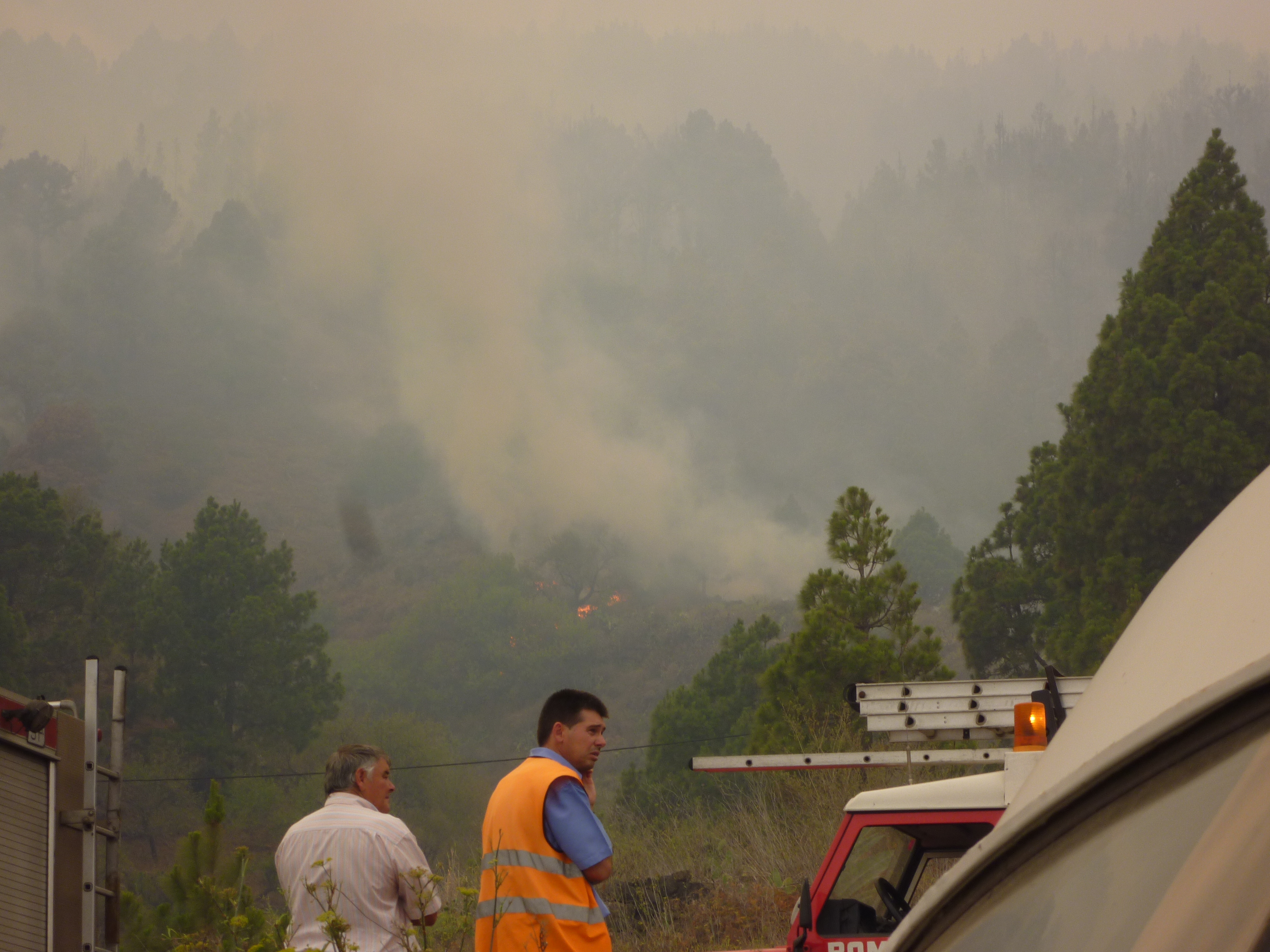
A photograph of the wildfire in La Palma during August 2012, image taken from the road
A photograph of the wildfire in La Palma during August 2012, image taken from the road

Climate Change Snapshots from my Canary Island Holydays (II)

This summer I was lucky to enjoy some vacation days in the very nice Canary Islands, concretely in Tenerife and La Palma. It was just holidays but Climate Change appeared, subtly in certain occasions I want to share with you again in this post as did in the previous one.

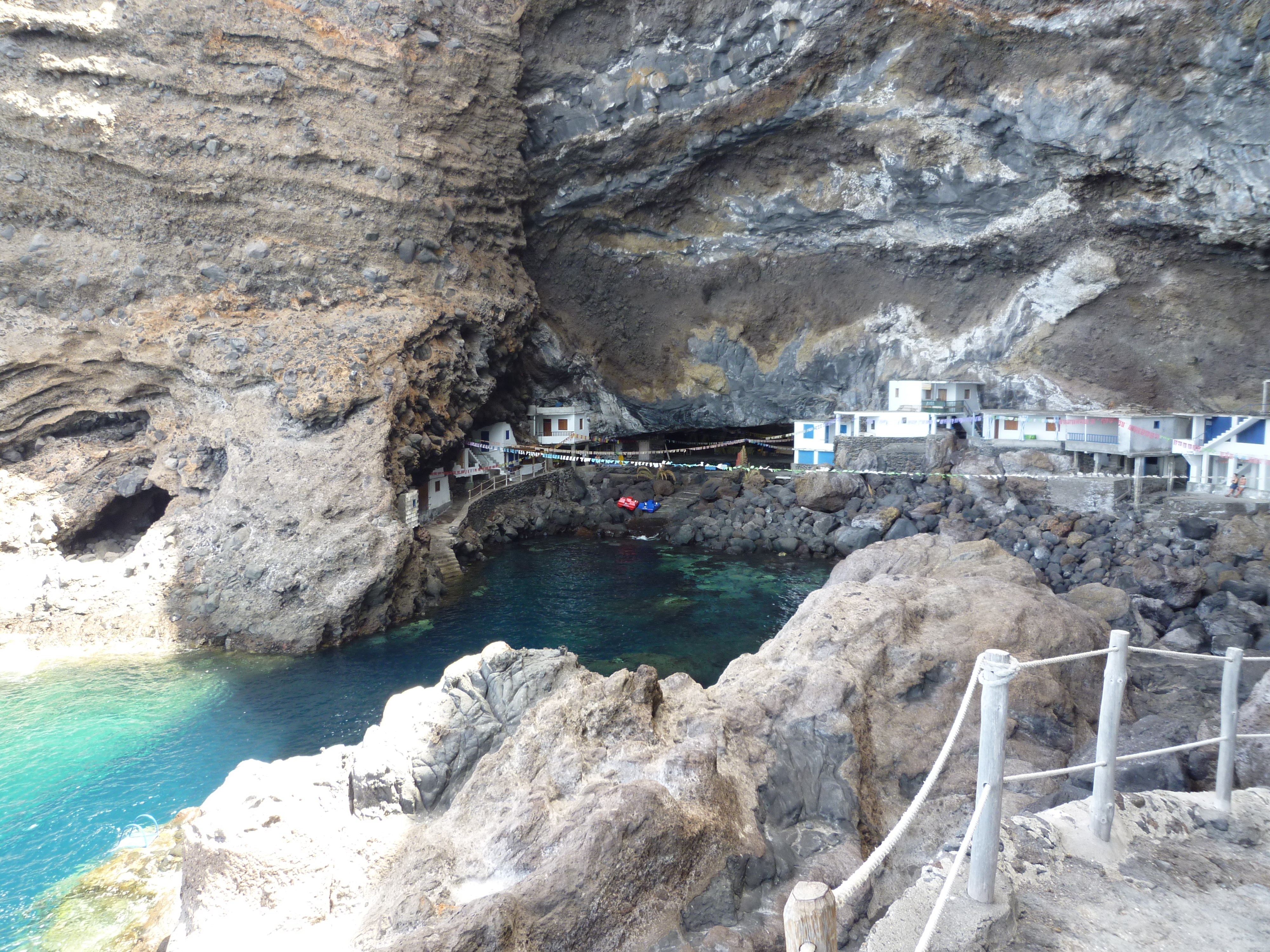
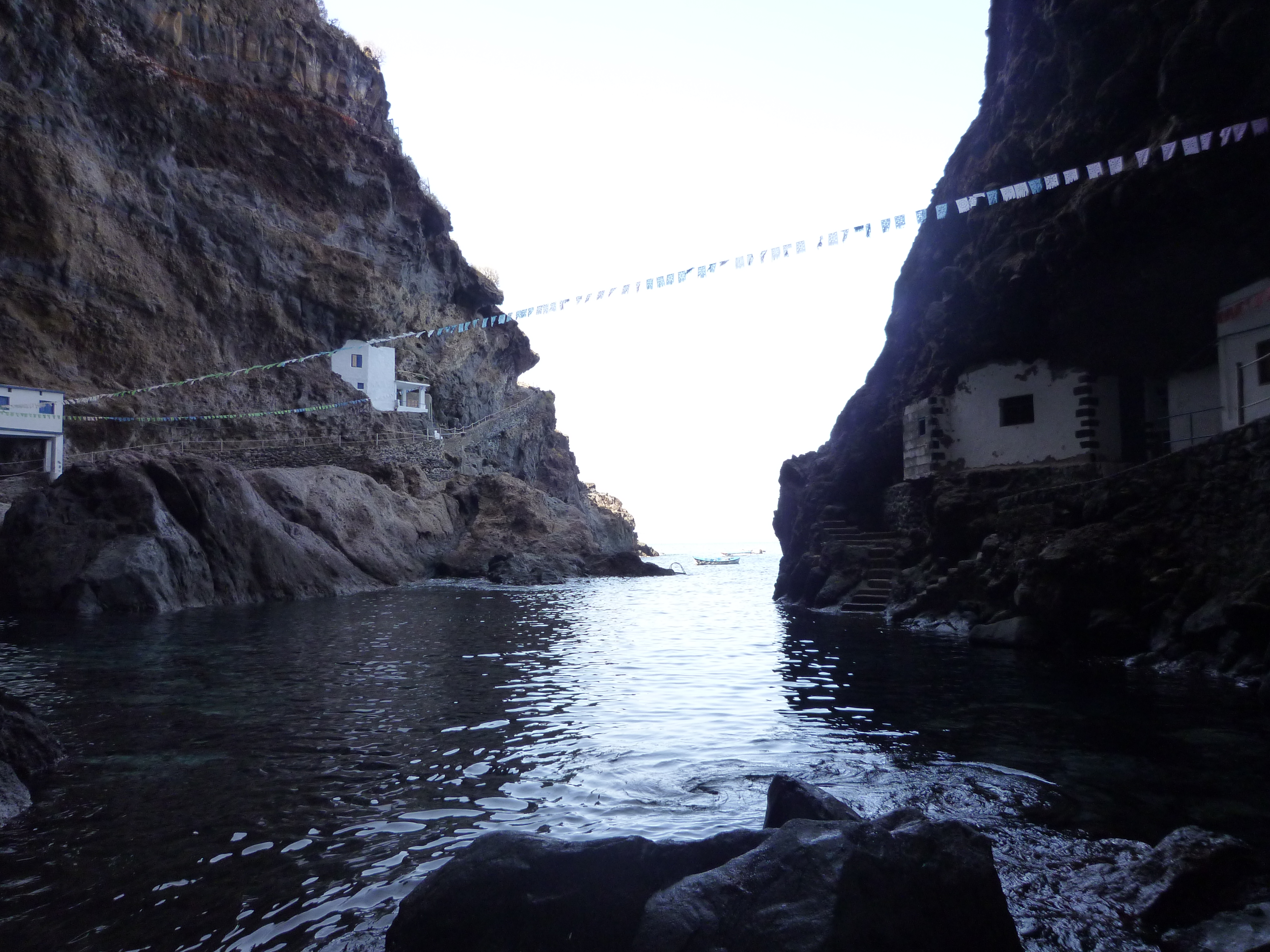
The images are from the Poris de La Candelaria a site with strange but striking beauty in La Palma island, concretely in Tijarafe town. Of course, my images are too poor to show the real beauty of this place that it is not a mayor turist attraction maybe due to the difficulties to arrive there. Nevertheless it is important for the locals for spare time use (fishing, sleeping near the sea, festivals,…) and also for the connection to their ancestors, as this places use is documented from the middle ages but is likely older.

And, where is the link to climate change? The link is in my thoughts. They told me that in spite of its peaceful aspect in winter  the storms can be strong there causing some damages in the amateur houses. In consequence I thought that in the future they will have to work harder to repair the damages in the stronger storms or even one day leave this place to the fishes due to sea level rise. I know it will not be the worse consequence of climate change but it will be a pity for them and for the eventual visitors.

Photograph from the entrance to Poris de la Candelaria

Photograph from the entrance to Poris de la Candelaria

Photograph from inside Poris de la Candelaria towards the sea

Photograph from inside Poris de la Candelaria towards the sea

Climate Change Snapshots from my Canary Island Holydays (I)

This summer I was lucky to enjoy some vacation days in the very nice Canary Islands, concretely in Tenerife and La Palma. It was just holidays but Climate Change appeared, subtly, as many other times in certain occasions I want to share with you.

The image is from the Loro Parque a “must” for any child visiting Tenerife. This site is a mixture of zoo- animal care and life shows, one even with orcas, that started as a Parrot conservation centre. My son loves it and the environmental message is widespread in the whole installations, although there has been some discussion in the media related with their last orca acquisition: Morgan. In contrast to the general environmental care advises climate change is not too present in the shows or readings. The only mention I found is in the snapshot below, in the penguins zone. It was good to find it but, in may opinion, it is not enough as climate change is one of the main risks of many species shown in the Loro Parque. And this kind of places are a great opportunity as they are visited by many people and several families and children not usually involved in climate change news circuit.

Snapshot from a explaining wall in the Loro Parque, the only one I found mentioning climate change

Snapshot from a explaining wall in the Loro Parque, the only one I found mentioning climate change

Extreme heat is here too

Yesterday a new temperature record was established in Basque Country, a very unusual 44.8ª for a mild temperature region. This summer extreme weather events are one of the hot issues in climate blogosphere, Climate Progress describes the hot summer and widespread drought in USA, skeptical science displays the last research results connecting extreme events and climate change, … At the same time, in the other side of the ocean the temperatures are getting extreme too as yesterda here or the three summer heat waves in the very mild Canary Islands where I was in hollydays. I am not very fond of talking too much of weather as skeptics usually do because our weather memories are weak and it is very easy to play a tennis match: today I believe, tomorrow not at all. Climate is not just weather, it is more global and in more time length. However, extreme events are important, for these reasons in my opinion:

1 If they are frequent enough, they show that temperature distribution is changing as explained in mentioned skeptical science post and many others. Many researchers are working in this link as that post shows.

2 More important than that is that they affect our everyday life, they are one of the first effects we are going to suffer from climate change.

3 They help increase most people awareness about climate change and could convince us to start making the difficult decisions we must make. Although this can be a dangerous weapon following the tennis match model and getting many people tired. For this reason it has to be explained well.

Even big oil companies detect risks from climate change.

Oil ExtractionMost important things usually involve contradictions, but this one is really incredible. This post explains with some examples the risks that big  oil companies are detecting for their business due to climate change, and they are clever to think in this way and forget all the propaganda that are helping to generate against climate change. But if they want to be really clever they could do better and research renewable energies shifting their current and profitable business. It would make sense economically, at least for all in the long-term.

The problem is that maybe they are more worried for their profits and the short-term. Climate change really needs a change of point of view regarding time perspective.


By the way, I have not read it anywhere but renewable energies could be quite vulnerable too due to climate change, for example hydro and wind energy. Solar could even improve in many locations. I think this deserves some attention with the long-term perspective.

Water: our great treasury at risk

This post (in Spanish) wonderfully explains the small amount of water there is in the earth compared to the size of the planet and the even tinier proportion of freshwater.

  • In fact, freshwater is less than 4% of the water in earth as 96,54% is in the oceans and seas.
  • Almost all the rest is in form of snow/ice, 1.76%, at least for the moment, and underground 1.69%
  • The lakes only hold 0.013% of the water, half freshwater, half salty. 130 ppm
  • The rivers are even more insignificant with a tiny 0.0002%, 2 ppm of the water. So, if we apply this stupid comment about the small amount of 450 ppm of CO2, we would have been lost as we depend on roughly 72 ppm of freshwater. I know this is nonsense, it is just to remember that in some cases ppms are critical.

Most dramatic consequences of climate change are related with water somehow: droughts, extreme rainfalls, floods,… Being conscious of the big figures can help us remember how delicate are water equilibria.

CO2 could help us to produce renewable energy?

Sometimes the line between good and bad ones is not only subtle, it is also changing fast.

If the technology these news  explain is succesful, we may find a good ally in this gas that is transforming our climate. The concept can be explained in a simple way, they extract the heat from the earth, at 800 m below the surface and use it to produce energy. This is not new, it is the geothermal energy, the funny issue in this case is that they do it in conventional thermal power stations using the output CO2 from the combustion as the thermal conducting fluid instead of, for example, water. This way, two benefits are obtained, in one hand some carbon sequestration (I do not know how much) and  in the other additional power produced from the extracted heat.

The authors are confident with their results to the extent of making a spin-off from University and funding their own company. I have more doubts for some reasons:

  • because I do not trust much carbon sequestration,
  • because I do not understand the advantages it would have respect to other geothermal technologies and
  • because the application seems a bit limited if they have to combine a thermal power station with an appropriate geological location.

In my opinion, the main advantage would come precisely from the possibility to harness the power of standard fossil fuel installations by avoiding much of their damage (I do not how much). We will see if these good intentions make good realities or are just too optimistic or too expensive. Sometimes, when we are too tied to something it is easy to lose perspective and favour those solutions that allow us to continue with the link; I suspect this is a constant temptation for us related to fossil fuel technologies.

In any case if it works and helps I will welcome it, whereas, for the moment, I prefer to bet in the already proven wind and solar industries, among others.

Finally, it is fair to mention that my information source was amazings.com

What happenend to the coldest May on record?

Coldest May was a repetitive title in one skeptic blog. I explained the hilarity I felt reading this by the mid or even beginning of May considering we were wearing T-shirts not so far but left for later comment the data.

Certainly the enthusiasm about this issue in climaterealists peaked in the mid of May and declined from then, as shown in next table. And there was even a slightly critics post, but not too explicit. Another confusing aspect was the geographical correspondence of the coldest may, where was it coldest? In some posts it was mentioned the UK, in others could have been the world and in the last one in June it was Australia, many choices indeed.

Date 25-30 April 1-5 May 5-10 May 10-15 May 15-20 May 20-25 May 25-30 May 0-5 June
Number of Posts 5 0 3 9 3 2 3 2

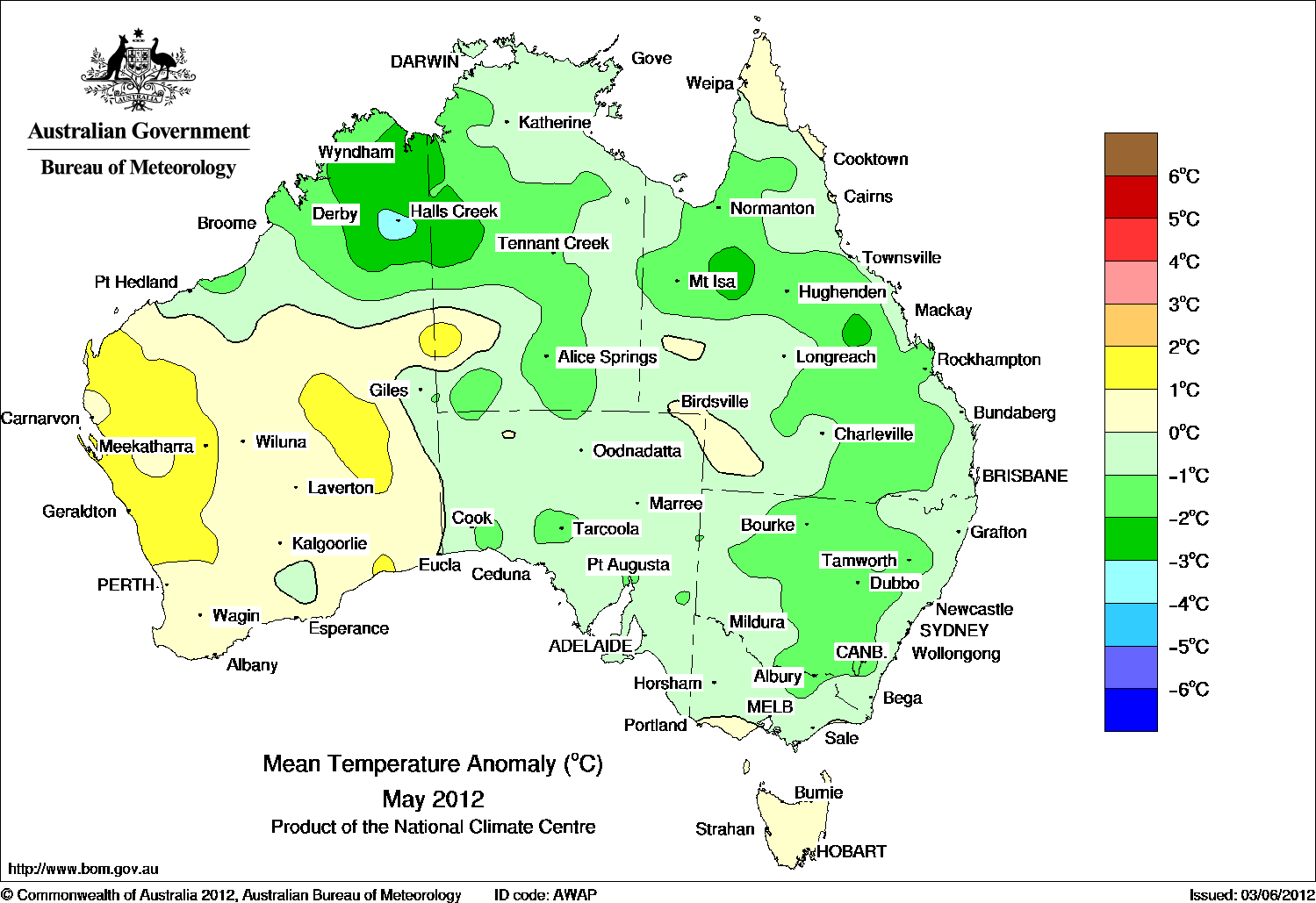
Lets look for the data now, at least for the fresh data collected in some official webs. May was not specially cold, it was hot in Greenland , it was above average in global temperature from satellites that skeptics love. Even UK and Australian temperature low records were not impressive as shown in figures below, it was hotter than average in UK and slightly cold in Australia. Although it is possible that there was a low temperature record somewhere in the world, but in that case this would be an example of extreme weather, wouldn’t it? Or maybe we can remember that weather and climate are not the same.

UK May temperatures from UK Met Office

UK May temperatures from UK Met Office

Australian May Temperatures from Australian Bureau of Meteorology

Australian May Temperatures from Australian Bureau of Meteorology

EROEI, another strange word

I recently met twice this interesting concept, EROEI, I do not intend to give a better definition than wikipedia so I quote it:

energy returned on energy invested (EROEI or ERoEI); or energy return on investment (EROI), is the ratio of the amount of usable energy acquired from a particular energy resource to the amount of energy expended to obtain that energy resource

The easy and rough way: how much energy you need to get a unit of energy.

  • How much energy is neccessary to drill holes for getting oil, and then tranporting, refining,.. before final consumption in form of gas.
  • How much energy is needed to build a wind farm and the electricity net associated.

I like this concept because it is very physical and physicists love those things. Apart from that it is something that does not depend on economic circumstances or the influence of big companies in prices, or subsidies… The economy is more prone to account for short term interests and factors, so a more pure measurement system to compare different energy sources is welcomed. Of course it does not substitute the actual prices because nobody will accept it straightforward but it is another tool to takelong term decisions and understanding what’s going on. These 3 links go deeper in that concept, here, hear, and here. And finally this article in neofronteras that explains it very clearly in Spanish, as usual in that blog.

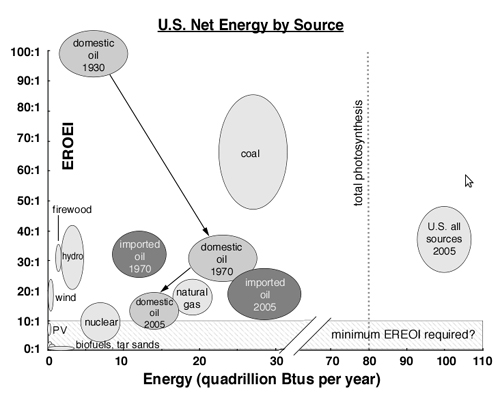
The calculated EROEI valujes range from 100 for oil almost in the surface to almost 1 or even less than one values for cases where the needed energy is more than the obtained.  It is considered that values below 10 are doubfully profitable and cases close to 1 should not be profitable at all but could be due to econonomical circunstances. Another factor is the time, that is not considered in this calcaulation and has led to other indexes as EIRR (last figure).

However, actual EROEI figures are not as pure as the concept and differ seiously from one source to other, you can check it in the figures below. Wind mills are ussually in the 20 values, quite good, there is also a coincidence about the lowering value of oil, but nuclear and coal prsent several different values. Photovoltaic is ussualy near the 10 limit. I do not know the cause of the divergence, I suppose it is not easy to calculate or maybe the same factors affecting energy economy are present here too, I will have to check it better.

At least, I agree with the idea that in the long term it is difficult to maintain a cheap low EROEI energy system, it would not be sustainable in any sense.

Another EROEI calculation, source, Searching for a miracle, but obtained from neofronteras.

Some EROEI calculations , source: Wikipedia

EIRR and EROEI from ococarbon.wordpress.org

EIRR and EROEI from ococarbon.wordpress.org

Risks of wind turbines

As I recently commented I think the the success of wind mills is one of the greatest driving forces for the frequent skeptical criticism. I want to study it more thoroguhtly but today I will just mention a good example:    This post in a portuguese skeptical blog really surpases most of the others.

Wind turbines are suposedly killers because there was a terrible car accident in Brazil in which a bus driver made a horrible mistake and crashed against the truck bringing a part of the wind mill. Almost 20 people were killed. The question is that the suposed killed could have been a big rock, a building, another bus, a truck with swines or even a gas truck, any big thing in the way of that poor bus. Because the bus invaded the other way.

Indeed, the blogger could have thought that the problem was the trafic and that a new transport concept with lower carbon footprint could help to avoid this fatal accidents, or that any other big energy structure could have been involved (a nuclear plant, a carbon power plant, hydro power,…). But, no it was the wind turbine, just because it was big and was there.

What really surprises me is how the get to know this kind of news. I sincerelly admire this research capability. Not so the later interpretation of the facts.