What do I think, What can I do?

Posts tagged ‘transport’

A real world electric car, more or less: Twizy.

Real Twizy photo

A photo of a real twizy of someone I know

Transportation produces roughly one-third of our CO2 emissions. And as we are not going to stop travelling or getting products from other parts of the world (for the moment), one reasonable way to reduce our emissions is to change our vehicles,  optimize them, or both at the same time.

In this sense, hybrid cars leaded by my beloved Prius were a good first step that is getting some success in the last years, at least in my home city, Bilbao. However electric cars seemed to be further from real world use, competing with the weakening hydrogen cars. I mentioned a nice project some time ago, but it was just that, a nice project. In this context I got very positively surprised to see that the company that makes succesful F1 engines is able to sell a small but cheap electric real car in normal car market. It is called Twizy and I know a real user close to me (the photo is taken thanks to that). His main complain is about the charging time of the batteries, yea this problem is not solved, and the low vehicle range neither but it is a first step, and all the great developments were done in far from perfect real steps. One nice solution from Renault for the price reduction is to hire the batteries, it is a kind of loan from the company, payable with the low fuel expenses.

My main criticism about this car is that is not really a car, it has not windows, it is more of a hybrid between car and motorcycle and only admits one passenger. OK, but it is a first step, an electrical vehicle in the streets that gets energy from standard plugs.

One last thought, some complain about the risks of its lack of noise. How used are we to the problems of combustion engines! I hop we will have to adapt.
Electric Bike: two experiences

image

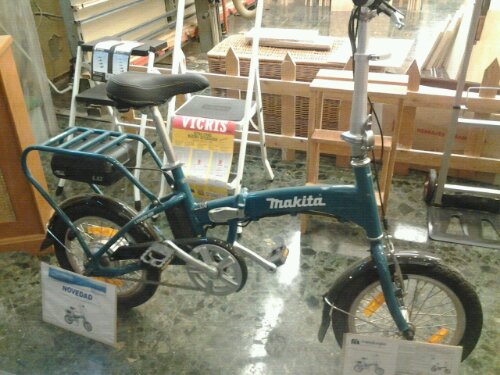
Electric Bike in a standard shop.

A pair of years ago we haired a pair of electric bikes from elektracar in a day visit to Formentera island. It was a wonderful experience to pass the other bikers efforlessly in uphills even with my son’s added weight and a quite heavy bicycle. Apart from the selfsteem increment it was very convinient for a non-frequent-biker like me not to get exhausted in a quite hot day. It was the first electric bike I rode or I saw.
For this reason, I am happy to see that nowadays even standard shops sell them and anyone can see it in Bilbao. Because this transport is easy to use, easy to deploy and confortable for small distances even if hilly. It really improves the potential of bikes for normal people without much trouble.
And could save some tons of CO2 emissions if substituting cars or motorcycles.
I was really tempted to buy one but I usually go by train to work and buying something because it is a great idea can also be a waste of CO2.

Transantartika, going to the south pole in low carbon way

Image from the official web

Transantartika is a sportive even, a tough adventure of three excellent climbers to conquer the south pole in a low carbon way. They celebrate the 100 anniversary of the Amundsen and Scott race for the south pole going with skies and kites. They are going really fast in some days driven by the wind. It would have been wonderful for Scott to have such a resource. It is not the only renewable energy they are using, they also power their electronics with solar panels.

It is interesting to see how related is the power of wind or other renewables with sport evens (also for sailings for example, or bicycles) and how far is from more common and everyday transport options. I know it is not the same, but it has to be quite reliable if they are risking their lives in Antantica. It is curious but Scott, who died in his expedition was a pioneer in using motorized sleights and nowadays with all the possible technology the wind has been chosen. Of course the technology has evolved a lot for the motors, for the materials and for the kites too, fortunately.

One final thought, will it be so interesting to do this in some decades? The temperatures may have risen noticeably although it could be even more unpredictable due to climate extreme events.

The risks: Why I believe in Climate Change (IV)

Clouds

When you do not see too much and you still have to take decisions, basic approaches can be helpful

As explained before, I believe in climate change for several reasons, witch include the temperature data and the mechanism of greenhouse effect and CO2. But now I want to follow another approach: What if we did not have enough data either to accet or to refuse climate change?

It happens many times in our life, we have to make important decisions without having too much security about consecuences. I think it happens in economy a lot of times, different strategies are recommended for European debt crisis but the uncertainties are great for any of them. In those cases, for many, the straigthforward solution is the standard one: business as usual, it is actually a way to avoid the decision or to avoid the unbearable uncertainty.

However this business as usual not always works, how many companies have failed for not being brave enough to innovate when it was neccesary! I think it is the case about climate change. It is a new challenge for humankind, maybe the first global critical challenge and it requires new prespectives. If we had not enough data we should balance the risks of the two failure possibilities one is difficult but the other one is dreadful in my opinion:

1.- The difficult one is to believe in the risk and act consecuently but if climate was not a real problem. So, more or less: reduce our energy demanding activities, rationalize our transport needs, control our population, be much more efficient in energy use and transport, make a great effort in development of renewable energies, spend more money in our energy bill,… I am convince all this means sacrifice, personal, colective and economical. But the ultimate situation would be that we would start in advance something we would need to do someday, change our energy sources, beacause fossil fuels are not forever.

2.- The dreadful one is to continue our growing path of greenhouse gas emissions, to burn coal, oil and gas as fast as we can and provoke serius changes in our planet climate without doing nothing serious to avoid it. The consecuences would range: problems in our water supply, food security, sealevel, public health, extreme weather event frequency,… So not only more sacrifice than in option one, it also means many more unexpected problems.

So, even without reliable data making proactive sacrifice know seems more reasonable because the risk is lower and predictable. And, besides, we are lucky because we do not need to do such a sacrifie only for an hipothetical problem (it uses to be very difficult to make sacrifices and more when the drawback is not completely sure) because we have the data and they are clear, our fossil fuel consumtion is changing the climate drastically and fast.

Three small piece of news about cars

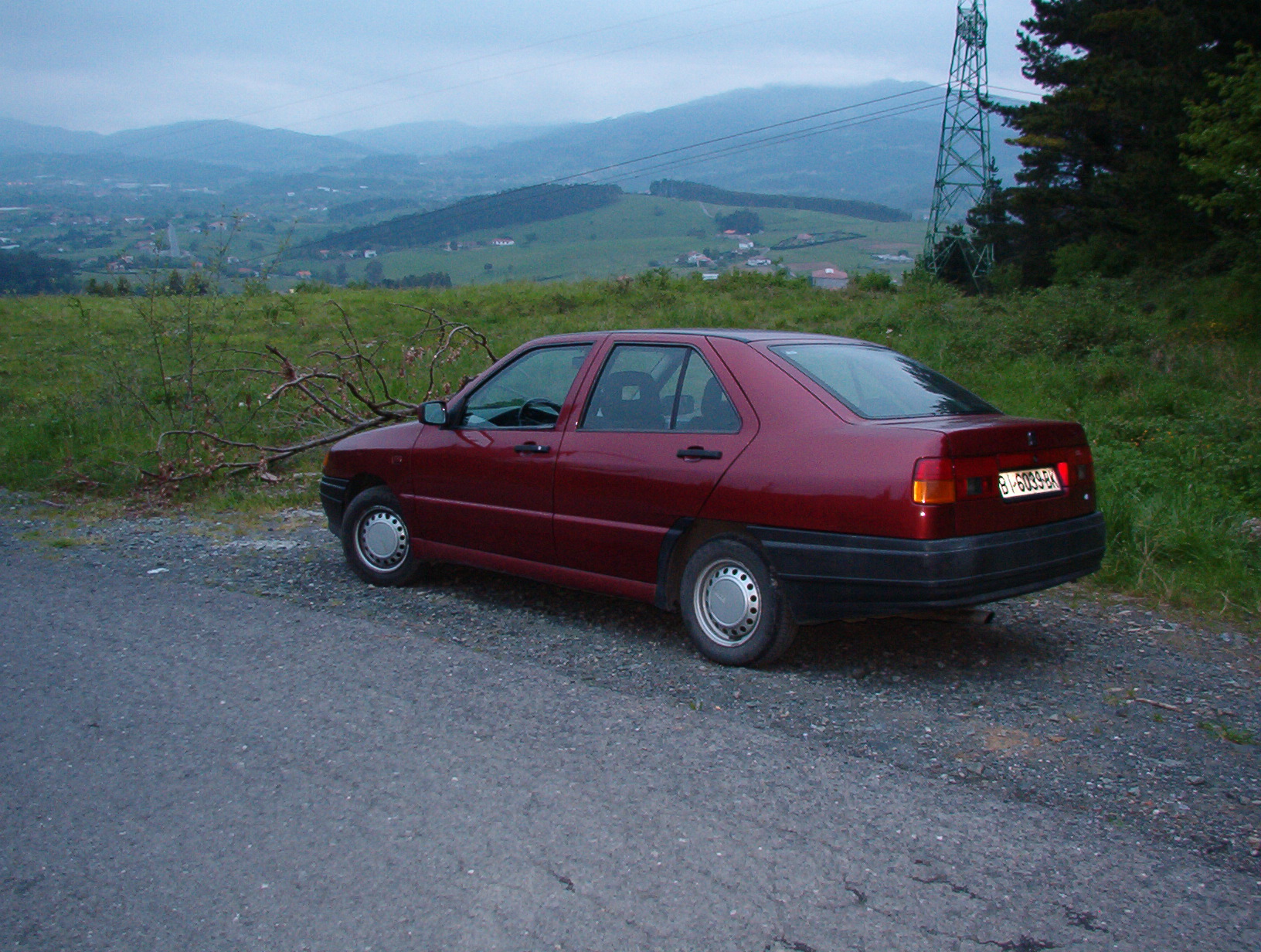
Our old Toledo car

Our old Toledo car


The cars are something more than a transport tool in many houses of western countries, they are a dream in some cases, almost a member of the family in others. In my work enviroment they are specially important as they are the one of the main targets of the steel we produce, so we talk frequently about cars, along with soccer and weather it is a confortable subject to talk about. My opinion and the opinion of many of my colleagues is quite different regarding cars and this helps me to think a bit about my ideas about transport.

This last week I remenber 3 unimportant conversation and news that show this divergence. One by one:

  1. One colleague is going to buy a car and I asked him if he thought about buying an hybrid one (we are two with hybrid cars now my wonderful Prius and a new lexus one). He told me that two motors in the same car and the necessary control is too complex, he is not sure about the madurity of the technology. It is an original argument because it does not talk about the cost. Of course I beleive hybrid cars are reliable enough, at least mine is 6 years old and works wonderfully well. (I will talk about it in another post).
  2. The second one is a conversation about fuel consumption of the Prius. One colleague remembered a figure about 7 lt/100Km. Whereas I never said this amount becasue my experience is that it is close to 5 lt/100Km but from the lower side.
  3. The final one was a nice documentary in the TV about a man that built a flying car and the dream that most of the cars will be like this in the future avoiding traffic jumps, long roads,… Freedom of movement is a wonderful dream, even for me but we need a realistic fuel for it. For the moment it seems more realistic to go towards low consumtion cars, better used ones, mass transit, woirking more at home or just walking or using bicicles.

In any case transportation is one of the biggest challenges we have to reduce CO2 emissions and maybe one the the aspecs in whitch normal citicens can do more but at the same time will suffer more changes. I think it is a good time to start thinking about it, start preparing ourself and start making small steps towards lower CO2 transport. The expensive oil will help us.


110 kph for saving energy, money or both?

Last week spanish government is facing severe criticism for proposing a maximum speed reduction from 120 to 110 kph in speedways. The mentioned reason is to save money due to petroleum price increase due to Libian uprising. I am not going to the political issue or discussion and different aspects of the proposal or how it has been explained or decided. This kind of measure is not new (speed limit), and the opposing opinions either.

Souce: Wikipedia. Author KaterBegemot. Speed limits in Europe

What really worries me and at the same time shows some opportunities are two questions:

  1. When energy and/or petroleum become very expensive, someone is forced to save, people, the government, companies,…  If we could reflect some cost of Climate change in nowadays main energy sources cost debates would be completely different.
  2. It is not easy to reduce our power to go fast, to consume what we want, to waste resources. It is unpopular because we do not link this to a greater future improvement. We mainly see our immediate loss. This is applicable to electricity costs, flights costs, and many other things.

But the question could be understood from a different point of view. Maybe we have lived last century from energy resources accumulated during millions of years and our credit is finishing because this expenditure is too much for our climate. So we could recognize it and start changing by ourselves with conscious sacrifice, or let the atmosphere act in our society, economy and so on and be forced to change late, worse prepared and fighting each other.

Because if we want to reduce speed and gas consumption a law nor any government is not really needed.

One day in Rome

In my comeback from the long blog-summer vacations I wish to mention my last week trip to Rome. I went for a business meeting and it was a two days journey in witch only the first one was in Rome itself. It was my first time in this ancient and full-of-history city and I really enjoyed walking along the remaining of the old empire, the lively squares and the renacentist buildings. Apart from the tourist enjoyment, two questions striked my, related to climate change:

The first one was the repeated advertising about a share holding operation on Enel company, the main Italian energy company. I do not know the real meaning of the advertisement or the company but everything was very green in the ads and main picture was about a field of photovoltaic panels. Ecology and renewables are considered closely linked and if they are regarded helpful to get good image. In my opinion this is essentially a positive progress in spite of its several drawbacks (“many not very greens pretend to be very green”, interesting subject for another post). So I got quite happy for that.

In the other hand,the second issue was negative, a repeating negative one. My Italian colleagues explained my that most Romans were firm car users, they distrust public transport for not being reliable or punctual. This makes the city more chaotic and of course produces several extra CO2 tons per year. Moreover, those attitude problems are difficult to solve and require time and patience, it is very easy to enter a endless loop: I do not use public transport because it is not good, public transport is not improved because is too expensive in part because it is not used, and so on. But who should break those dynamics? Governments with convinced politics, like in the case of public debt reduction? Or convinced citizens who intend to change the mind of their policy makers?

Like the old times in which all the ways leaded to Rome, I think any way is good but we have to be fast because we may have less time than we think.