What do I think, What can I do?

Archive for the ‘Small Great things’ Category

Climate Change Snapshots from my Canary Island Holydays (II)

This summer I was lucky to enjoy some vacation days in the very nice Canary Islands, concretely in Tenerife and La Palma. It was just holidays but Climate Change appeared, subtly in certain occasions I want to share with you again in this post as did in the previous one.

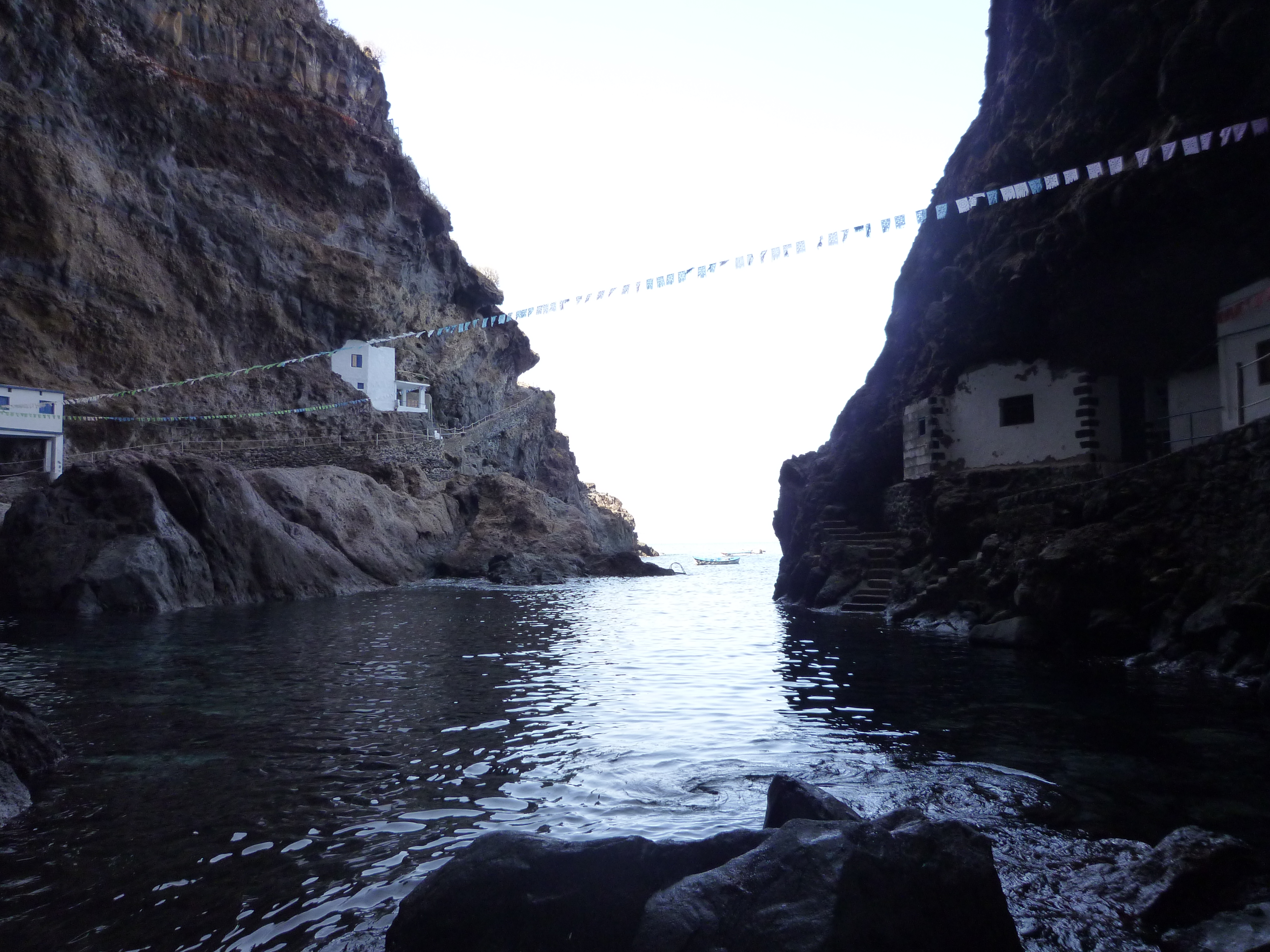
The images are from the Poris de La Candelaria a site with strange but striking beauty in La Palma island, concretely in Tijarafe town. Of course, my images are too poor to show the real beauty of this place that it is not a mayor turist attraction maybe due to the difficulties to arrive there. Nevertheless it is important for the locals for spare time use (fishing, sleeping near the sea, festivals,…) and also for the connection to their ancestors, as this places use is documented from the middle ages but is likely older.

And, where is the link to climate change? The link is in my thoughts. They told me that in spite of its peaceful aspect in winter  the storms can be strong there causing some damages in the amateur houses. In consequence I thought that in the future they will have to work harder to repair the damages in the stronger storms or even one day leave this place to the fishes due to sea level rise. I know it will not be the worse consequence of climate change but it will be a pity for them and for the eventual visitors.
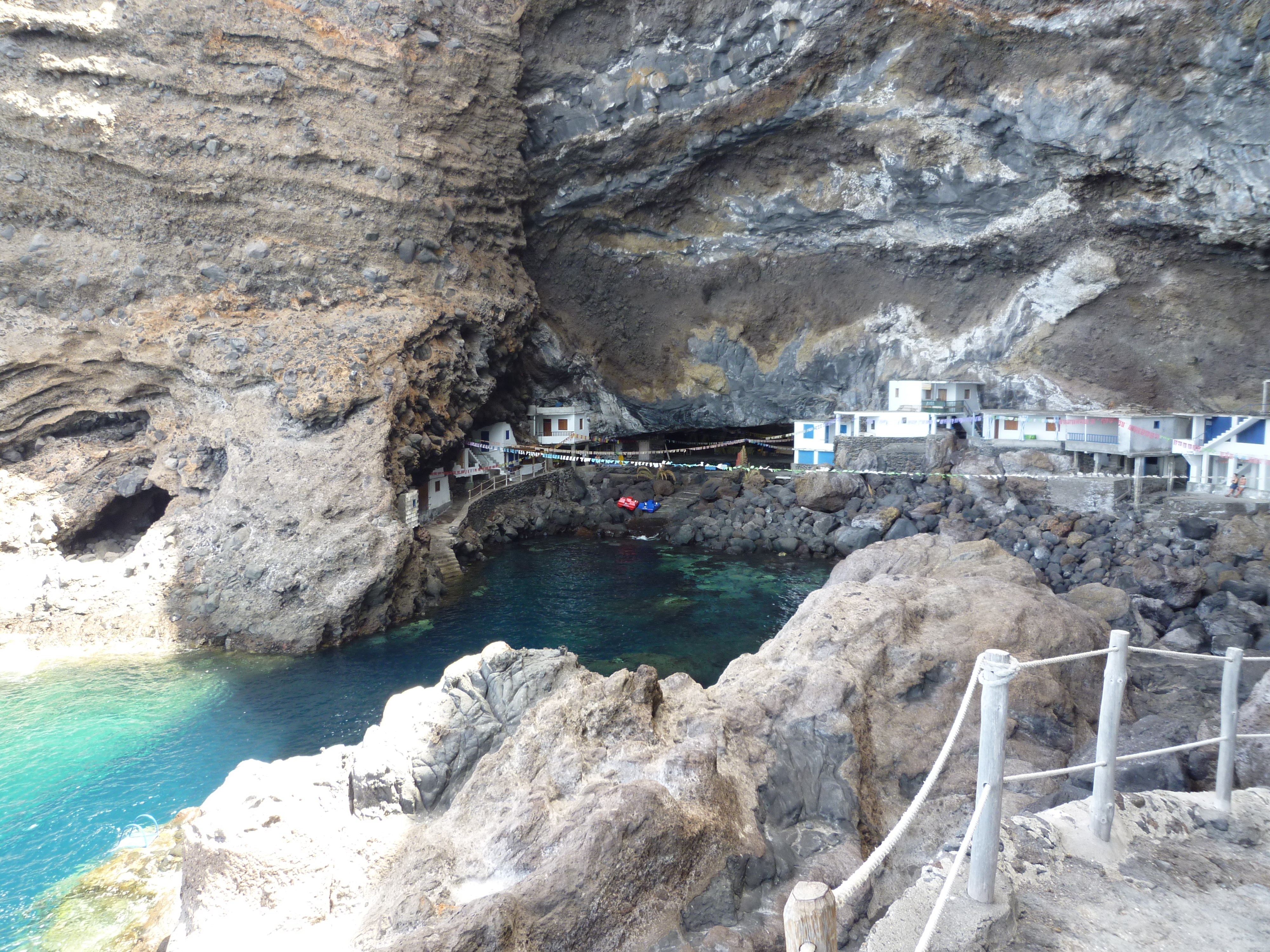
Photograph from the entrance to Poris de la Candelaria
Photograph from the entrance to Poris de la Candelaria

Photograph from inside Poris de la Candelaria towards the sea

Photograph from inside Poris de la Candelaria towards the sea

Climate Change Snapshots from my Canary Island Holydays (I)

This summer I was lucky to enjoy some vacation days in the very nice Canary Islands, concretely in Tenerife and La Palma. It was just holidays but Climate Change appeared, subtly, as many other times in certain occasions I want to share with you.

The image is from the Loro Parque a “must” for any child visiting Tenerife. This site is a mixture of zoo- animal care and life shows, one even with orcas, that started as a Parrot conservation centre. My son loves it and the environmental message is widespread in the whole installations, although there has been some discussion in the media related with their last orca acquisition: Morgan. In contrast to the general environmental care advises climate change is not too present in the shows or readings. The only mention I found is in the snapshot below, in the penguins zone. It was good to find it but, in may opinion, it is not enough as climate change is one of the main risks of many species shown in the Loro Parque. And this kind of places are a great opportunity as they are visited by many people and several families and children not usually involved in climate change news circuit.

Snapshot from a explaining wall in the Loro Parque, the only one I found mentioning climate change

Snapshot from a explaining wall in the Loro Parque, the only one I found mentioning climate change

Even big oil companies detect risks from climate change.

Oil ExtractionMost important things usually involve contradictions, but this one is really incredible. This post explains with some examples the risks that big  oil companies are detecting for their business due to climate change, and they are clever to think in this way and forget all the propaganda that are helping to generate against climate change. But if they want to be really clever they could do better and research renewable energies shifting their current and profitable business. It would make sense economically, at least for all in the long-term.

The problem is that maybe they are more worried for their profits and the short-term. Climate change really needs a change of point of view regarding time perspective.


By the way, I have not read it anywhere but renewable energies could be quite vulnerable too due to climate change, for example hydro and wind energy. Solar could even improve in many locations. I think this deserves some attention with the long-term perspective.

Photovoltaic cells in our windows?

image

Old photovoltaic cell

Most of the energy we use comes from the sun, even if we are not too conscious of it.

Different kinds of solar energy are the most evident example, but the wind is also moved by the energy injected in our atmosphere by the sun, as well as the water of rivers and lakes. All biofuels are generated by photosintesis diven by sunlight and even the fossil fuels were produced that way millions of years ago. They are so energy rich because they concentrate the accumulation of energy in organic compounds produced during a long period of time.The exceptions to energy coing from the sun are only nuclear and geothermal.

So it is not strange to think that the Sun should be our main target to find the solution for our climate change problem. But it is not so easy. The whole earth receives a huge amount or solar energy in form of light but it is not so concentrated, and consequently not so easy to extract and use practically. For this reason photovoltaic cells have evolved slowly for many years (and because of lack of investment and production effort).

Nevertheless, knowadays there are many technological improvements in the solar field that could lead us to a successful energy revolution. The most real one is the steep reduction in price of standard photovoltaic cells, with this trend grid parity will be out of dicussion in many places in short time.  But it does not stop there, Heliatek german company says it is able to produce semitransparent cells (link in Spanish) able to be located in windows with sufficient efficiency even at low light conditions and not affected by heat. This would be very interesting as the integration in the buildings could be straightforward, the only problem is the the price is not mentioned. How expensive will it be with respect to the energy produced? I know a tall house near here with a whole surface of glass, it could be a terrific power station. Sometimes it is not the optimun solution what succedes is just a reasonably good one in the right place and right moment, we will see.

Story of one dizzy parcel

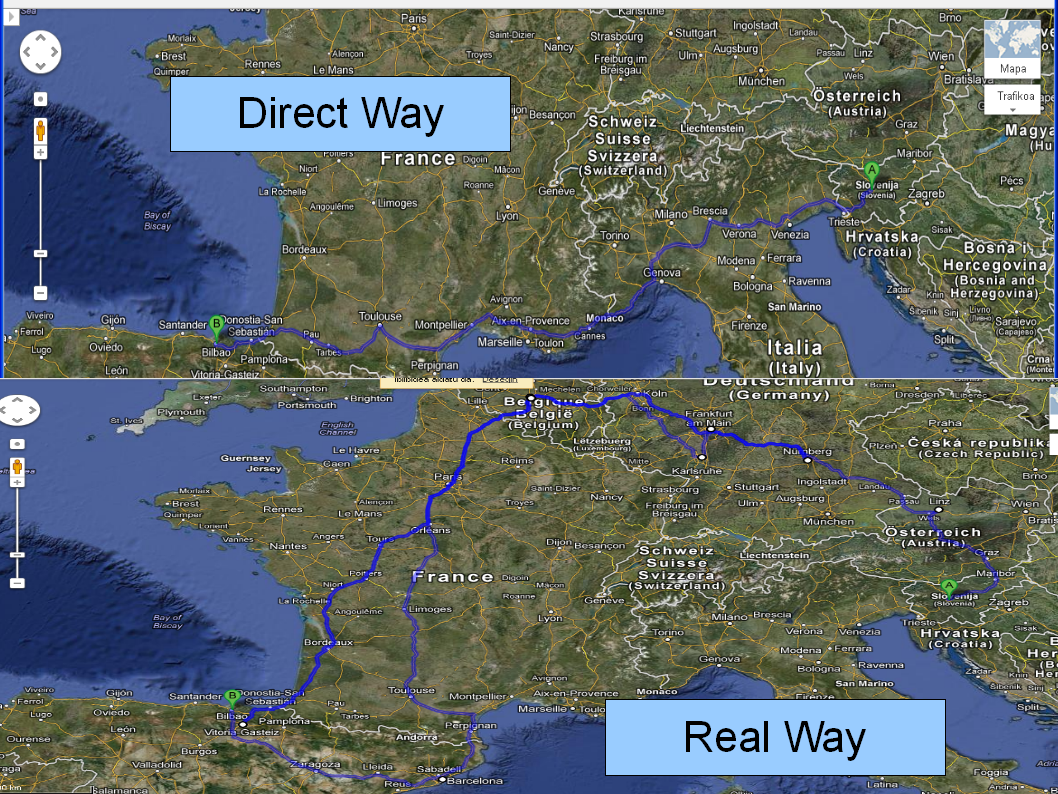
A pair of weeks ago I bought a parcel from Ljubliana (Slovenia) with tracking number and the possibility of checking the status of the parcel via web. It was a big parcel and everything arrived well and in a reasonable time. Nevertheless, my big surprise was to check the incredible route followed by it.

Following google maps the straight way is 1796 Km, quite long. I understand that shipping company cannot follow the direct way in every parcel, they have to use their intermediate transport centers. But the route of this one challenges any logistics considerations. It was this one: LJUBLJANA – LINZ – BRUSSELS – NUERNBERG- FRANKFURT – MANNHEIM – BRUSSELS – VITORIA – BRUSSELS – VITORIA – BARCELONA – VITORIA- and finally: Bilbao. More than 7100 Km, for times the minimum by road. The two routes are displayed in the figure below. Some aspects are really striking, as the three times it was in Brussels or in Vitoria, it had to get dizzy moving around this way.

Transportation is responsible of more or less a third of the CO2 emissions in most of the world and certainly there is room for improvement, as stated in this case. Because transport is not only ourself moving, it is also the movement of the things we buy and use. This web: sourcemap is a great resource to learn about it, I have to check it more.

Maybe a key point is that the fuel is not as expensive as we consider it or that the minute is considered more expensive or costly than the Km, at least for the moment. One way for improvement is to change this considerations and align cost to climate change effects. In my opinion this will become more widespread and accepted with the time, I hope it is not to late by then.

Parcel sightseeing EU

Two screenshots from Google Maps displaying the direct way recommended by maps and the actual way followed by the parcel.

A real world electric car, more or less: Twizy.

Real Twizy photo

A photo of a real twizy of someone I know

Transportation produces roughly one-third of our CO2 emissions. And as we are not going to stop travelling or getting products from other parts of the world (for the moment), one reasonable way to reduce our emissions is to change our vehicles,  optimize them, or both at the same time.

In this sense, hybrid cars leaded by my beloved Prius were a good first step that is getting some success in the last years, at least in my home city, Bilbao. However electric cars seemed to be further from real world use, competing with the weakening hydrogen cars. I mentioned a nice project some time ago, but it was just that, a nice project. In this context I got very positively surprised to see that the company that makes succesful F1 engines is able to sell a small but cheap electric real car in normal car market. It is called Twizy and I know a real user close to me (the photo is taken thanks to that). His main complain is about the charging time of the batteries, yea this problem is not solved, and the low vehicle range neither but it is a first step, and all the great developments were done in far from perfect real steps. One nice solution from Renault for the price reduction is to hire the batteries, it is a kind of loan from the company, payable with the low fuel expenses.

My main criticism about this car is that is not really a car, it has not windows, it is more of a hybrid between car and motorcycle and only admits one passenger. OK, but it is a first step, an electrical vehicle in the streets that gets energy from standard plugs.

One last thought, some complain about the risks of its lack of noise. How used are we to the problems of combustion engines! I hop we will have to adapt.

Earth Hour and Strike balance

Thanks to the wonderful information from Spanish electrical distribution data it is possible to make an evaluation of Earth Hour. At 21:00 29000 MWh were used whereas it was 31500 last saturday and 31400 the previous one a 8% less. It is more than my expectations because I checked the lights around me and I did not notice any change with respect to a normal day. Even ourself started late as we did not notice the hour, after that we enjoyed 45 lovely minutes in candlelight. And I have to confess there was some light outside, so it was not so difficult.

To compare it with another figure, there was a general strike on Thursday, in this case the consumption dropped more or less from 33000 MWh to 27000 MWh in the morning hours, a 18%. The three last figures in the post show the day consumption evolution for those three days, Earth hour (saturday), strike (Thursday) and before strike (Wednesday).  Four basic conclusions:

  1. Classical ways of protest are still stronger than “new” ones, at least in this case and for the moment.
  2. Earth hour had an impact and enough followers to reduce the total consumption by 8% (it was even mentioned in the TV at 22:00, I got quite happy about that).
  3. We have margin and possibilities to reduce energy demand without returning to the caves. The best renewable is the efficiency and the best efficiency is to consume less.
  4. We, Consumers, are more powerful than we think, but we need coordination to show our strength

Earth hour day energy consumption and generation in Spain (source https://demanda.ree.es/demanda.html)

Strike day energy consumption and generation in Spain (source https://demanda.ree.es/demanda.html)

Day before strike energy consumption and generation in Spain (source https://demanda.ree.es/demanda.html)

Earth Hour in four days

This Saturday, with the hope of the beginning of Spring in Northen Hemisphere an interesting event will take place: the earth hour. I think I remember it or something similar from other years, but in any case I got the news from a street advertisement (classical media are still useful to some extent, although it would be great to get it from Angry Birds). In their web  explain it started in Australia in 2007, it is widespread now throughout the world, it is organized by WWF and wants us to make a contribution against climate change. The actions consists of turning of lights for one our from 20:30 to 21:30 on Saturday. I understand that it is local time, so it will not be simultaneous for all. I suposse that a coordination of a simoultaneous one is much more difficult but it would really funny for any astronaute or an alien observer.

Now, that were are in strike and demonstration times in Europe this other way to revindicate things its quite refreshing for me. New times, global problems and posibilities require global actions and new ways for cityzens in any part of the world. I think it has many unexplored possiblilities not only for general reivindication but also for more concrete ones.  For example, recently there was a crowded demonstration asking to shut down Garoña nuclear power station, most people living close to it, particularly in Basque Country is quite worried by this old nuclear very similar to Fukushima.  Demostrations are OK, but maybe a massive reduction of power requirement and commercialization might be more worrisome to the owners of the power station or the Goverment making the decision.

I believe in the joined power of small citizens, it is something we need in climate change, we need a big and diversified driving force. Making concrete things is a way to start and feel you get some reward. It is just a symbol, but it could help to gain moment. Next saturday I will try to shut down the lights and if we are lucky and more people shuts down their lights and the clouds go to another place enojy one hour of starry night in the city. I will prepare the telescope.

Climate Wars: The war on books.

This battle is not a real battle as the stolen email case (climategates vs. Herathland institute). It is
a different fight mostly dialectic but a fight after all. It is about books. One month ago a german book was considered a great success in skeptic blogs: Die Kalte Sonne. Two were the main reasons for skeptic joy, one of the authors had been an important environmentalist in Germany and the book was quite successful in Amazon Germany, at least before selling. Climate Hawks did not mention this too much except the answer in SKS, explaining the links of the author with energy industry and the mistakes contained in the book.

A bit later the most mentioned climatologists Michael Mann published a book about climate science and its wars. This book was harshly criticized by most famous skeptic blog WUWT as it uses to be anything Mann does. But this campaign reached again Amazon (definitively a battlefield) following the WUWT recommendation to vote it negatively. The defense came from Joe Romm in a nice to read post thinking about Amazons review system but at the same time taking care about ethics limits. In my opinion contrary to the emails one, this was a victorious battle, at least in the weapon choice. I bought Mann’s book for Kindle (I hope to read it someday).

At the same time this kind of books are not only interesting for their readers, the presentation of the book is a great opportunity for general media to remember climate change and say something meaningful and more effective than the book itself (I really have to put it in this year full list). And maybe someone will be interested enough to read it and get more conscious of climate change challenges.

Electric Bike: two experiences

image

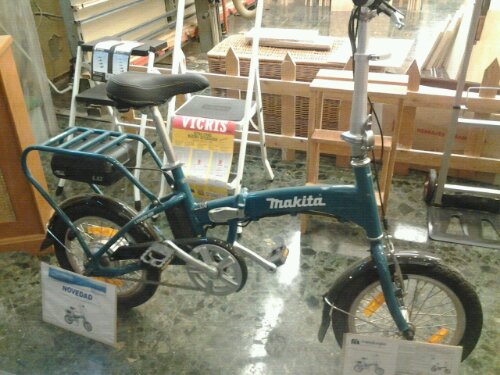
Electric Bike in a standard shop.

A pair of years ago we haired a pair of electric bikes from elektracar in a day visit to Formentera island. It was a wonderful experience to pass the other bikers efforlessly in uphills even with my son’s added weight and a quite heavy bicycle. Apart from the selfsteem increment it was very convinient for a non-frequent-biker like me not to get exhausted in a quite hot day. It was the first electric bike I rode or I saw.
For this reason, I am happy to see that nowadays even standard shops sell them and anyone can see it in Bilbao. Because this transport is easy to use, easy to deploy and confortable for small distances even if hilly. It really improves the potential of bikes for normal people without much trouble.
And could save some tons of CO2 emissions if substituting cars or motorcycles.
I was really tempted to buy one but I usually go by train to work and buying something because it is a great idea can also be a waste of CO2.