What do I think, What can I do?

Archive for the ‘Uncategorized’ Category

My prius

image

A couple of years ago my old car died with the boots on and we decided at home to buy another car. I think we can live without a car. Actually, anyone can do it, but in some cases it would require severe changes intheir lives.

In our case, we decided to continue with the possibilities a car offers. It may seem a standard solution but it is important to remember that transport accounts for  a XXX % of CO2 emissions in XXX.

So recognizing my incapability to choose the lowest carbon option, at least I tried to minimize the impact by opting for a lower carbon technology available at that moment: an hybrid car. The two options were an Honda Accord Hibridd and our prefered one, the Toyota Prius. The other option was related with our consumer choices, we bougth a quite knew second hand car because we do not make too many Km each year.

And the result up to now, 3 years after the buying action? We, all the family, are very happy with this car. As I am not talking about cars quality I am going to focus in fuel expenses issues. It uses slightly less than 5 lt per 100 Km, eben if my colleagues do not remember it correctly. It certainly excells in quasy-urban trips, more than autoroutes. Many colleagues consider this figure unimpressive, whereas I consider it very good for a car in its size and age (6 years old).

industrialize energy

Industrial figure from http://wallpaper.diq.ru

I recognize I have a positive opinion of industry, in spite of all the human suffering frmo the XVIIIth centuries to now, in spite of all the water, soil and air contamination. I still consider industry something that gave most humans access to many things that were just a luxury in preindustrial era. Many of those things have changes our lives, the cars, bicicles, washing machines, TV, phones, clothes, paper, … Of course another factor for this opinion is that I live in an industrial area and work in an industrial company.

Industry is really the transformation of standard raw materials in very interesting objects. And I think that this is the step we should also follow with energy: transform energy production in an industrial based process instead of a resource based one. With raw material as easy to find as wind, sun, water, geothermal heat,… Because this way instead of depending on the scarce resources that have been acumulated in the earth for millions of years and concentrate in few places, we would get this essential resource, the energy from very commong things and effort. I love this idea, I love it from the moment I first listened it, for this reason I love renewables.  I know this is not very important, the concept can be wonderful but it has to work, it has to be attainable. I am convinced it is and we will see it, if it is soon much better.

I almost forgot it, industry generates many more jobs than resources.

Brussels airport, small example of EU

Last week I took another flight again to go to Hannover this time. The following photos from Brussels airport show how CO2 diminution is considered a positive message for big european companies, even for energy related ones; atleast in Brussels. Next two photographs are from Statoil and ABB and both are quite explicit regarding CO2 diminution.

image

image

The risks: Why I believe in Climate Change (IV)

Clouds

When you do not see too much and you still have to take decisions, basic approaches can be helpful

As explained before, I believe in climate change for several reasons, witch include the temperature data and the mechanism of greenhouse effect and CO2. But now I want to follow another approach: What if we did not have enough data either to accet or to refuse climate change?

It happens many times in our life, we have to make important decisions without having too much security about consecuences. I think it happens in economy a lot of times, different strategies are recommended for European debt crisis but the uncertainties are great for any of them. In those cases, for many, the straigthforward solution is the standard one: business as usual, it is actually a way to avoid the decision or to avoid the unbearable uncertainty.

However this business as usual not always works, how many companies have failed for not being brave enough to innovate when it was neccesary! I think it is the case about climate change. It is a new challenge for humankind, maybe the first global critical challenge and it requires new prespectives. If we had not enough data we should balance the risks of the two failure possibilities one is difficult but the other one is dreadful in my opinion:

1.- The difficult one is to believe in the risk and act consecuently but if climate was not a real problem. So, more or less: reduce our energy demanding activities, rationalize our transport needs, control our population, be much more efficient in energy use and transport, make a great effort in development of renewable energies, spend more money in our energy bill,… I am convince all this means sacrifice, personal, colective and economical. But the ultimate situation would be that we would start in advance something we would need to do someday, change our energy sources, beacause fossil fuels are not forever.

2.- The dreadful one is to continue our growing path of greenhouse gas emissions, to burn coal, oil and gas as fast as we can and provoke serius changes in our planet climate without doing nothing serious to avoid it. The consecuences would range: problems in our water supply, food security, sealevel, public health, extreme weather event frequency,… So not only more sacrifice than in option one, it also means many more unexpected problems.

So, even without reliable data making proactive sacrifice know seems more reasonable because the risk is lower and predictable. And, besides, we are lucky because we do not need to do such a sacrifie only for an hipothetical problem (it uses to be very difficult to make sacrifices and more when the drawback is not completely sure) because we have the data and they are clear, our fossil fuel consumtion is changing the climate drastically and fast.

The science I understand: Why I believe in Climate Change (III)

I am a physicist by education and work in industrial research so I consider myself at the same time able to understand the physical concepts underlying climate change and not an expert in any way. Because it is very important to say that experts in any scientific/research field are not clever minds that understand the basic theories by magic means, experts are the ones collecting data, working with them, knowing the research trends in the field and debating each other results. And scientific experts publish their work in peer reviewed journals. I have been lucky to publish scarcely in another area but not in climate, regrettably I think this also happens with some pretended “experts”.

But this time I want o walk a little bit by myself, because it is true that finally ones mind needs explanations understandable for himself. There are many evidences, this post from climateprogress is in may opinion quite clear about it, that something important is happening to the world climate, and it is happening fast in geological standards. Because it is not only about measuring temperatures in the land(a frequent sceptik criticism is about temperature measurement failures), it is also about sea level, glaciers, ice extent, sea temperature, extreme climate events,…

So, something is provoking that more energy is in our lower atmosphere, were we live. It could be the inputs, but solar cycles are in the same magnitudes as later centuries. There is no mayor volcano, no asteroid crash. But we are throwing tons and tons of greenhouse gases to the atmosphere and even if some continue having doubts, greenhouse effect was theorized and probed by Arrhenius 100 years ago. It is easy to explain in a simple way: we all emit radiation depending on our temperature, as the sun is much hotter than us its radiation is different from ours and some elements are able to stop suns radiation, whereas some others stop earths radiation like smoke hinders normal light propagation. This way if they stop our infrared radiation we will get hotter. It is the reason Venus is so hot, or the reason to the severe temperature difference between earth and the moon. And the more greenhouse gases the hotter we will get. Of course is more complex, feedbacks should not be forgotten and proven that our emissions are significant enough, but the main idea comes from the XIXth century, and the mechanism, the data and other measurements agree quite well:

If it looks like a duck, swims like a duck, and quacks like a duck, then it probably is a duck.

Spanish elections and Climate Change

It is always interesting to listen what it is sadi in electoral campaings. Ok, I recognize it will not always be fulfilled later, or even worse, some parties make several statements thinking they never will have opportunity to make them true but this way they can improve their position, or make opponent ones unconfortable. Nevertheless, elections still continue to be a privileged moment to check the best intention of any party, and their believefs about public opinion.

And regarding climate change those Spanish elections show tw interesting data in my opinion:

1.-Climate change has not been a main topic in this Campaing, it is not strange considering the serious economic crisis. However the climate crisis may be more profound and much more risky in the long term. Renewables and energy have not been the main topic either but they have been present due to the economic consequences and recent Spanish energy history.

2.- The most interesting thing is that climate change have been overwhelmedly accepted as real and important. Even the winner, the right-wing PP party saids clearly so in spite of its good relationship with american Republican party . Europe and USA are different in this aspect, althoug in practice this can be a small difference in some cases.

Anyway, there is a more detailed analysis here. Of course it is not objective, because it is an interesting review about renewables. But mine it is not either and maybe objectiveness is just an ilusion best reached from adding different subjectivenesses.

Do we have to recalculate Fukushima’s bill?

Normal
0

false
false
false

EN-US
X-NONE
X-NONE

MicrosoftInternetExplorer4

/* Style Definitions */
table.MsoNormalTable
{mso-style-name:”Tabla normal”;
mso-tstyle-rowband-size:0;
mso-tstyle-colband-size:0;
mso-style-noshow:yes;
mso-style-priority:99;
mso-style-qformat:yes;
mso-style-parent:””;
mso-padding-alt:0in 5.4pt 0in 5.4pt;
mso-para-margin-top:0in;
mso-para-margin-right:0in;
mso-para-margin-bottom:10.0pt;
mso-para-margin-left:0in;
line-height:115%;
mso-pagination:widow-orphan;
font-size:11.0pt;
font-family:”Calibri”,”sans-serif”;
mso-ascii-font-family:Calibri;
mso-ascii-theme-font:minor-latin;
mso-fareast-font-family:”Times New Roman”;
mso-fareast-theme-font:minor-fareast;
mso-hansi-font-family:Calibri;
mso-hansi-theme-font:minor-latin;
mso-bidi-font-family:”Times New Roman”;
mso-bidi-theme-font:minor-bidi;}

The atomic nucleus is an incredibly small place with exceedingly strong powers fighting each other. This power was first showed in Hiroshima and Nagasaki. Those people living there suffered terrible devastation from two small bombs and world vision of war and peace was never the same again. But at the same time many people started to dream about harnessing this incredible power, Asimov’s classic science-fiction novels are full of those examples, I think it was the hope of a generation and a really nice hope because unlimited cheap energy would be a wonderful thing to improve our lives.

In nuclear case, however, it was more complicated. I have posted before I am neither in favor nor totally against nuclear power. Climate change is a must and an urgent risk so we have to be careful with the MWh production we lose. I also believe that we have to consider the total bill of nuclear energy, including accidents, stronger safety measurements and waste disposal for a long time. And these not very commented news from beginning of this month may be important to recalculate those costs, because Japanese again have suffered the worst part of nuclear power and it seems that Fukushima’s issue is far for being solved and clarified for cost calculation updates.

And when we recalculate, it may happen that many renewables are not so expensive. I suspect that this is one of the reasons for most countries not to deploy nuclear power plants in the last 20 years.

Three small piece of news about cars

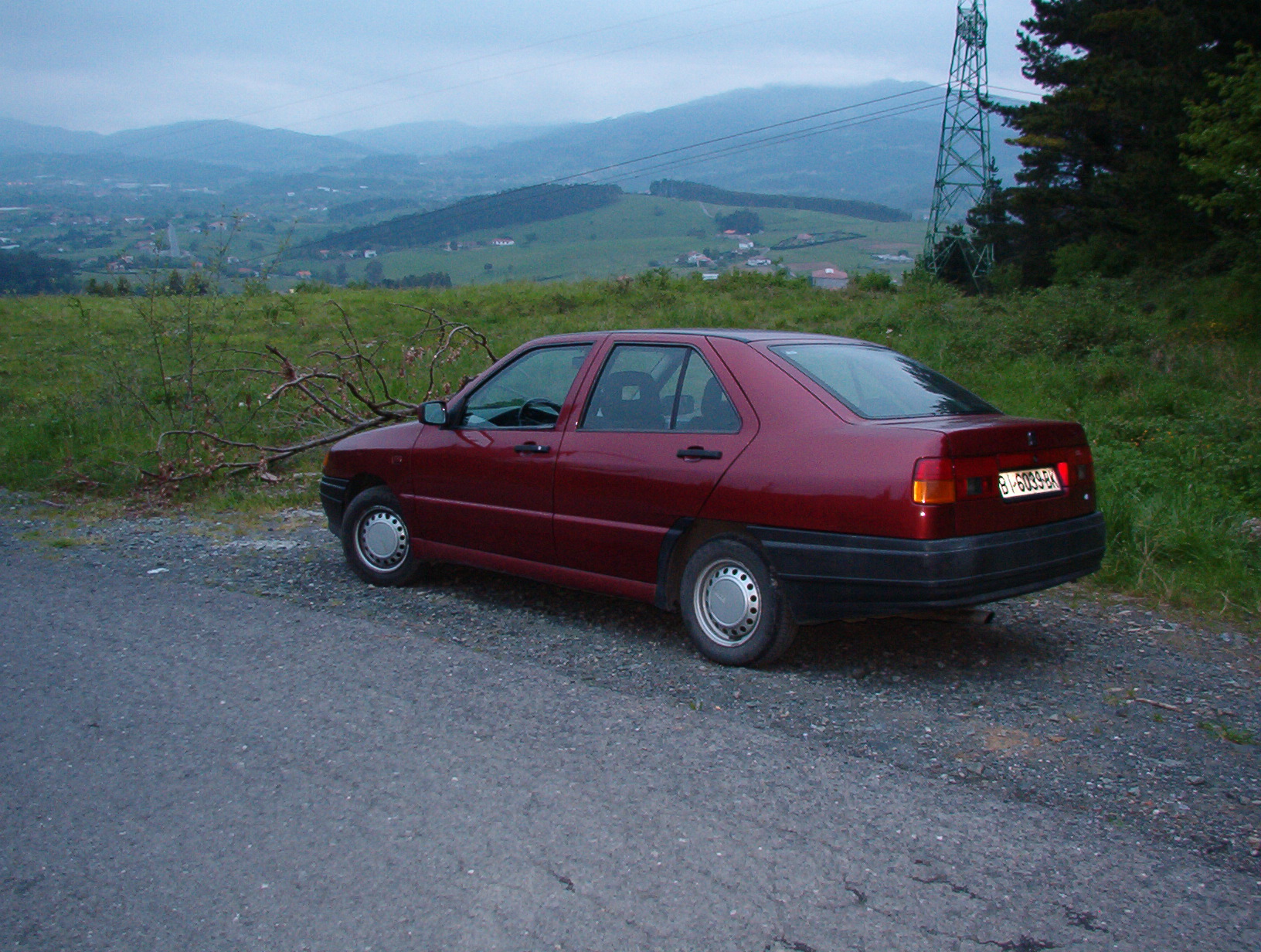
Our old Toledo car

Our old Toledo car


The cars are something more than a transport tool in many houses of western countries, they are a dream in some cases, almost a member of the family in others. In my work enviroment they are specially important as they are the one of the main targets of the steel we produce, so we talk frequently about cars, along with soccer and weather it is a confortable subject to talk about. My opinion and the opinion of many of my colleagues is quite different regarding cars and this helps me to think a bit about my ideas about transport.

This last week I remenber 3 unimportant conversation and news that show this divergence. One by one:

  1. One colleague is going to buy a car and I asked him if he thought about buying an hybrid one (we are two with hybrid cars now my wonderful Prius and a new lexus one). He told me that two motors in the same car and the necessary control is too complex, he is not sure about the madurity of the technology. It is an original argument because it does not talk about the cost. Of course I beleive hybrid cars are reliable enough, at least mine is 6 years old and works wonderfully well. (I will talk about it in another post).
  2. The second one is a conversation about fuel consumption of the Prius. One colleague remembered a figure about 7 lt/100Km. Whereas I never said this amount becasue my experience is that it is close to 5 lt/100Km but from the lower side.
  3. The final one was a nice documentary in the TV about a man that built a flying car and the dream that most of the cars will be like this in the future avoiding traffic jumps, long roads,… Freedom of movement is a wonderful dream, even for me but we need a realistic fuel for it. For the moment it seems more realistic to go towards low consumtion cars, better used ones, mass transit, woirking more at home or just walking or using bicicles.

In any case transportation is one of the biggest challenges we have to reduce CO2 emissions and maybe one the the aspecs in whitch normal citicens can do more but at the same time will suffer more changes. I think it is a good time to start thinking about it, start preparing ourself and start making small steps towards lower CO2 transport. The expensive oil will help us.


7.000.000.000 people

A lot of people souce: Flicr

It is the news of this week, and for this time I agree with the media choice. I know it is a convention, and that nobody really knows when it will happen exactly. But, OK this is not the main issue for me. The main question is our great reproductive success as specie.  I have confused feelings about that. Certainly I am worried, and I am not alone . More people is more CO2. It is true that the population growing faster is less CO2 dangerous but it is not less true that per capita CO2 emissions have not decreased the last years globally (see figure below), so even if some carbon efficiency is gained in some countries the in the world average more people means more CO2 in the last 50 years. So we have only two ways of decrease the total amount (the one that counts):

  1. Decrease the population.
  2. Decrease the CO2 per capita.
  3. Or even better: control the population and reduce the CO2 per capita.

In most of the world, however, a population decrease is seen a great problem as it means getting old as a country and we are used to live with many young people sustaining our economies. It is something we will have to think of, considering someday we will have to stop growing for one reason or another. Maybe climate change is the first serious warning in this sense, a symptom showing the impossibility of eternal growth. Or maybe we need to suffer the consequences of natural disasters to convince us to regulate ourselves.

In any case, I am happy for this new baby, because it is a new hope for everyone. And my hope is that we will learn to be socially and enviromentally sustainable, not an easy objective but a clever one.

CO2 emissions per capita in the world in the las 50 years (made with CDIAC data)

London trip

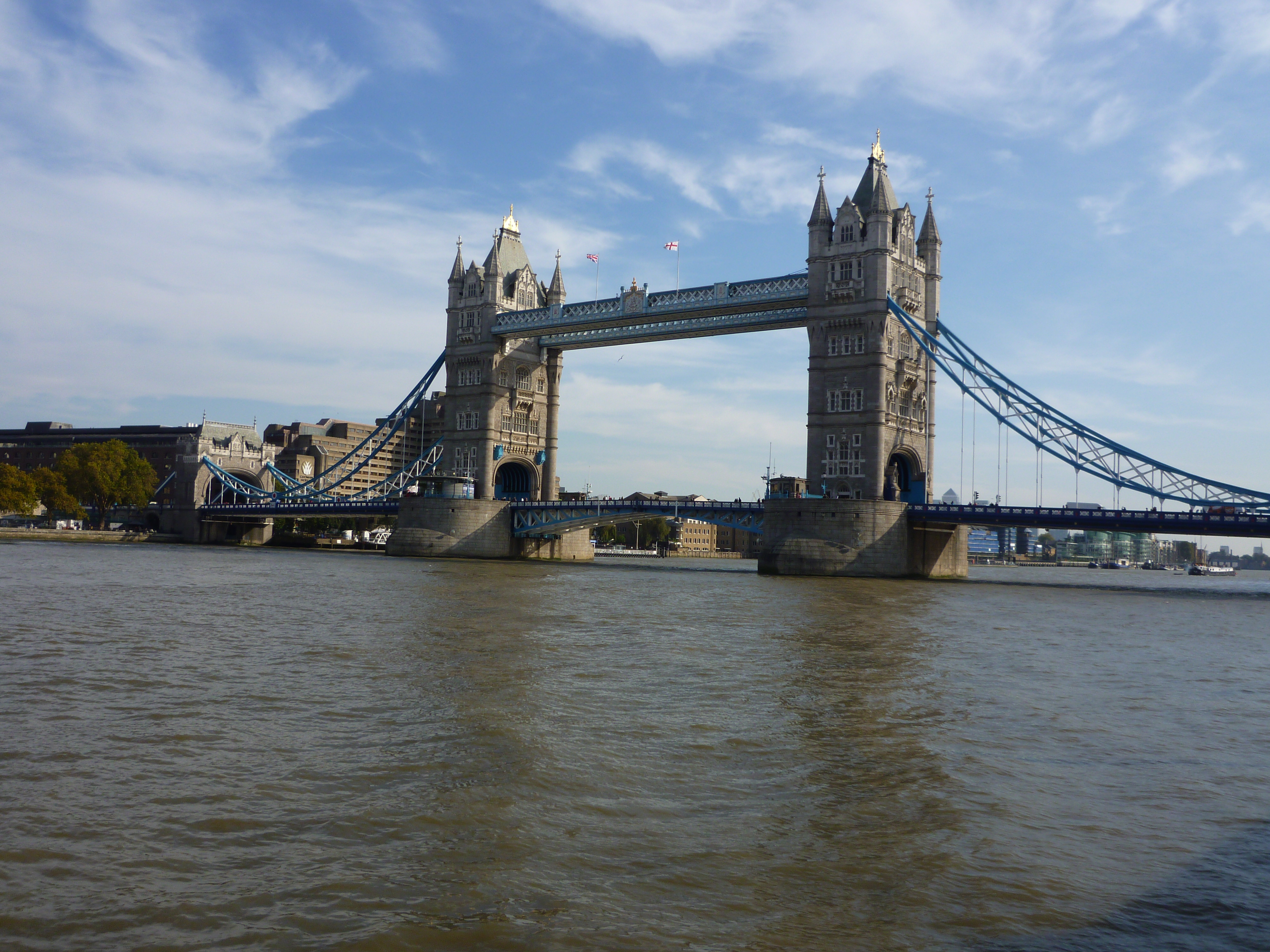
Tower Bridge in London

Tower Bridge in London