What do I think, What can I do?

Last Saturday, I had the opportunity to watch Promised Land in the cinema, and as going to the cinema is a rare pleasure for me I enjoyed the film.

Apart from my personal experience, the film is in this post because it is about fracking. Concretely, it is quite critical with fracking companies ppractices and reveals possible strong negative effects of fracking in the environment.

Fracking is subject that is gaining some presence here as some gas could be extracted from our lands. Oil or natural gas discovery has been one of the dremas of any world wide government, a synomnim of wealth and prosperity for the country or at least for some in the country (this depends on the sharing procedure, but it is not the object of this post). On the other side ecologists are afraid of the side effects of this technology.

In climate and energy related blogosphere it hs been discussed many times. For example, an Oli Crash post is very pessimistic about fracking possiblities. The basic argument is that its expensive, much more than accepted. Climate progress is skeptic respecting fracking too. This web is fairly optimistic. Some consider it is the only low carbon solution for China as it hahas helped the USA emission reduction. Maybe the one that I found more convincing is the numerical skepticism by David Appel. The CO2 reduction (compared to coal) could be generously compensated by methane emissions.

One of the things that surprised me in the film is that theydid not even mention renewables, as if they were not present in the USA. I think we are too late to think about provisional solutions or fracking bridges. We need clear emission reductions and renewables are far better for that than fracking, in fact gas is a fossil fuel, maybe cleaner or maybe cheap sometimes (or not), but a CO2 producing fossil fuel, and this is not a solution to climate change, it is a problem. Natural gas could the the last fossil fuel to sustitute but not the prefered to install.
This study published in Nature is very interesting because makes numbers about emission targets, the peak emission year and the consequences up to 2100. The study recognizes the great grade of uncertainty in some aspects as the absolute amount of consequences and this in my opinion gives it more credibility.

On the other hand it states clearly than the date and the amount of the peak of emission is more important than the later reduction rate. It says that even if it very difficult to know what will happen exactly the proportion of it will be much lower if we peak our emissions fast.

I find this result interesting, important and encouraging at the same time. Because it would not be so difficult to peak world emissions:

  • Most European nations and maybe the USA have done so
  • The BRICS, concretely China and India had better add new power by renewables than coal, it makes sense in many aspects.
  • The poorest countries do not have much influence in the decisions nor in the emissions, but for them too renewables with help of richer countries make more sense.

Going further to the 80% reduction from current emissions as the final target seems much more difficult but this study finds we have some extra time for that. So let’s start with the first step: the world emissions peak.

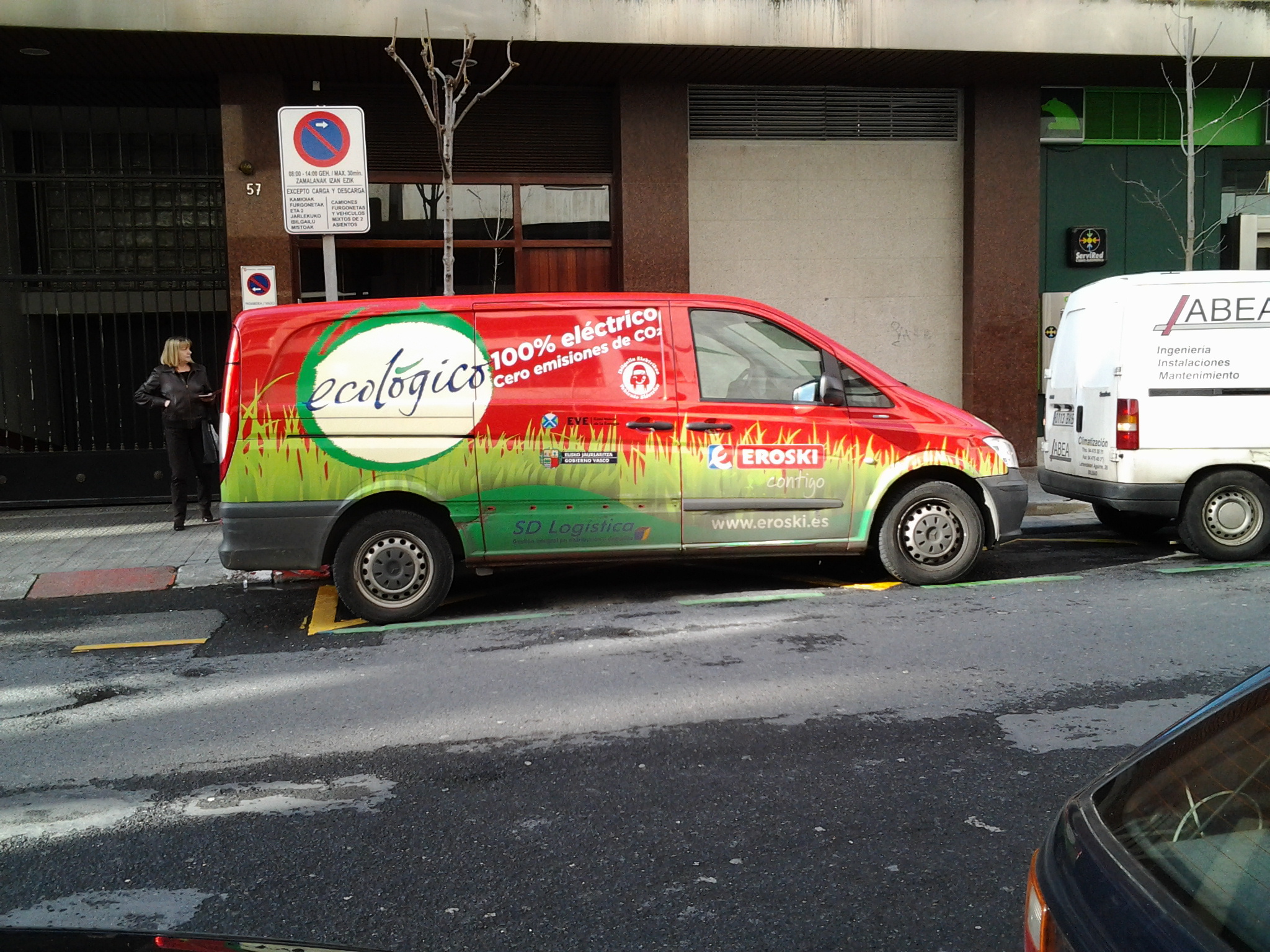
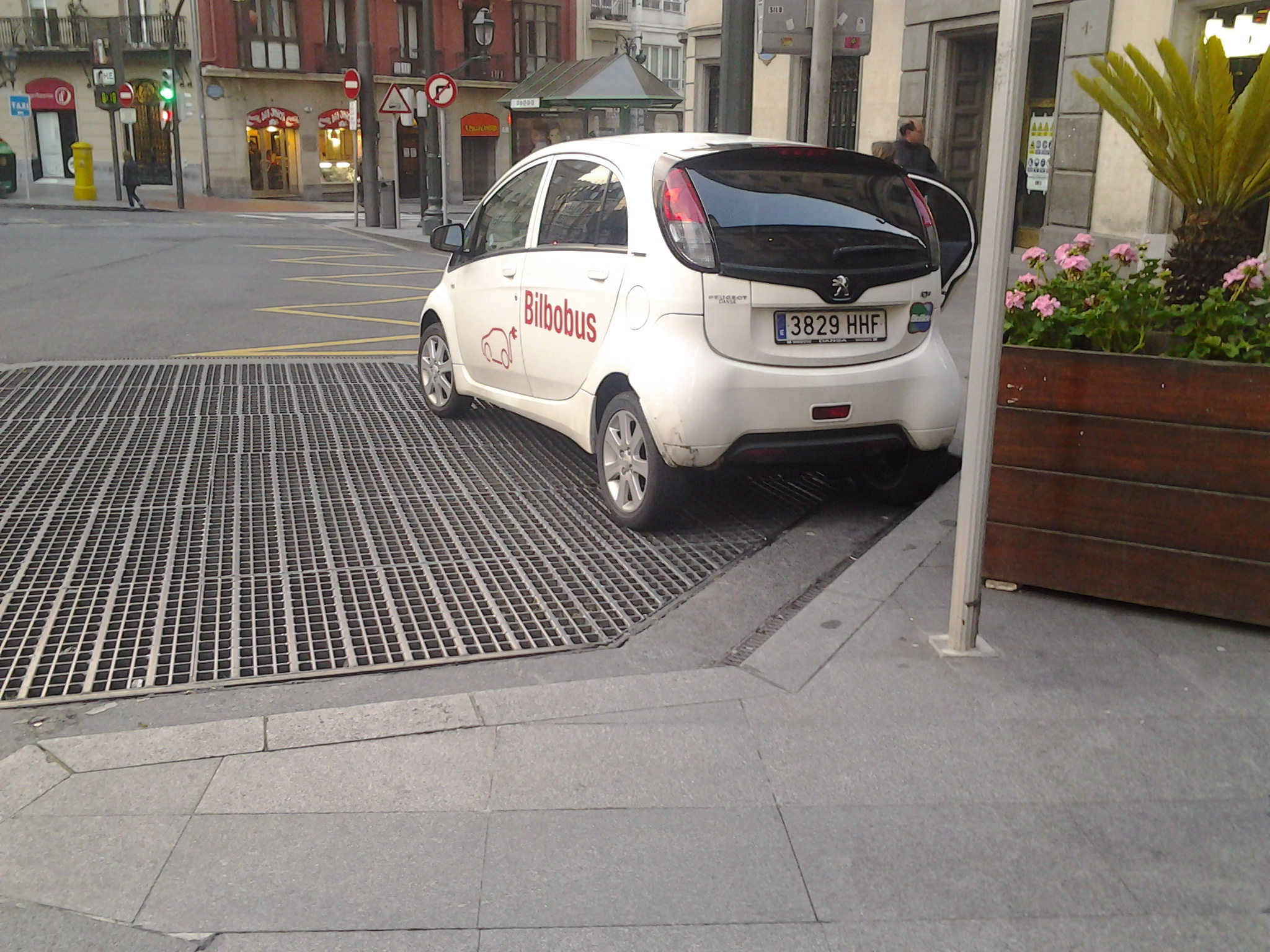
It is clear that for now electric cars are not changing the transport emissions in Spain with a very disappointing 70 cars sold in March. But I see some of them in the streets of Bilbao and in some other trips so, those are my hopeful photos of electric cars in the streets (I do not think any of them is a particular car but they are real and are being driven in the streets):

2013-04-03 08.19.00 2012-05-08 14.28.53 2012-05-11 16.04.11 2012-07-09 18.00.13 2012-12-02 17.15.16 2013-02-12 14.13.05 2013-03-19 10.10.50

LED lamps from wikipedia

LED lamps from wikipedia

Today I have bought some led bulbs for my house, I have needed some time really to check the different connectors and chose the correct letters and numbers but finally I hope to have bought the correct ones by internet. At home we changed most of our incandescent bulbs many years ago by fluorescent ones, except some that due to the connector were impossible to find.  And some fluorescent bulbs were deceptive because they did not last long but many other are long-lasting and I do not intend to change them before they die out.

So, this substitution operation was only partial, some of the last no-fluorescent-no-leds and some missing gaps. But the most interesting part is a back-of-the-envelope figure I made to calculate the electrical consumption with any of the options. The calculation procedure was simple: for each room of the house count the number of bulbs and the required power with any of the options and then estimate the number of light hours daily. The difference was greater than I expected:

  1. 62 KWh per month with incandescent bulbs
  2. 26 KWh per month with fluorescent bulbs
  3. 7 KWh per month with led bulbs

I got even happier after the estimation. I was surprised by the difference because hour energy consumption per month is not more than 150 KWh and we are more or less in the second stage. But was it economical? I am convinced so, even more, if not something would be really wrong in our economy.

The nice thing is that this shows we have the technology to reduce our energy consumption and emissions in just a click of the mouse, efficiency is possible and will be the most important source of energy in the first world if everything goes right because it is needed and not so difficult in some cases. By the way, I still have a lot of bulbs to change in the future to reduce my emissions.


Last saturday was again the earth hour or planet hour. In the day itself and later it was funny to read many skeptics fight against it as here, or here more aggressive. There were favorable posts too.

My personal balance this year was worse than last year because we forgot about it until last 30 minutes, so I did not help much in spite of being convinced. And a more general balance? WWF shows a nice gallery of  images  that demonstrates at least some action arround the world.

Like last year I have collected the electrical demand data from REE (the official source), and even if the consumption was higher than las year, 31600 MW, it was 2000 MW lower than the previous saturday, more or less like the last year. Not so bad but not impressive as I would like, but this figure is only about a very small part of the world, we have to remember that this is a world-wide problem and a world-wide action in this case. Anyway, I agree with my ideas from last years post.

This is not going  to change hour emission path but coordinated global citizen action is very important and could be very helpful to push the different policy makers to endorse the solutions we have, because it is possible to reduce hour emissions without going to the caves again.

Spanish electricity consumption on 23/03/2013, from REE

Spanish electricity consumption on 23/03/2013, from REE

I was glad to read about planet hour in this science post. I did take part last year and I still consider it a good tool. It will not change the course of our planet emissions but it is a way of taking part as a citizen in a global action to ask more important actions. It is a clear and direct symbol, it is not difficult but help us think a bit about our needs in our everyday life, and again it is global and we need global action and global solutions for this very global problem of climate change. Let’s start with this small but symbolically strong effort.

Among my blogs-to-read it is one from peak oil movement or thinking current. The peak oil concept is easy to explain and really logical at least in the initial concepts:

The oil is a finite substance and consequently someday it will wear out. The second idea is that that day it is not so far and for this reason we have reached the maximum oil production of our history: the peak oil. The next step is that this concept is applicable to many other important substances to our civilization as gas, uranium, coal, copper,… The last one is that it does not have reasonable solution, the only way is to degrowth in an ordered way or do it in a chaos. However the final positive message is that the final world we can reach, doing things well, will be very austere but satisfying in many senses.

I read them with interest although I am not convinced of many of the steps like the inevitability of the strong degrowth or the grade of depletion of many energy sources. So, I was surprised to discover a strong critics to peak oil concept in another blog I read. A stronger grade of critics than mine really, and this helps me notice again how ideas that are different could share common goals, at least for some time, but do not for our strong sense of …

Peak oil and climate change fight are different concepts, in one sense peak oil forecasts a time without oil and will miss it a lot and climate change would like to forecast a time with the oil inside the ground as a synonym of healthy climate. However the current goals are not so far: change the energy production system and make it renewable to a great extent, the hopes or forecasts are not so common but this should not be a problem to find allies in this difficult task..

Northern route map from http://www.fni.no/

Many people in the maritime transport industry is thinking about the possibilities of using the shorter northern passage to go and come from Asia. Even the north pole could be reachable by 2050 with a small icebreaker. This can be considered a positive consequence? I think so, as it will make easier, shorter, cheaper and less carbon intensive to transport many goods in the northern hemisphere.For climate change itself the negative impact is much bigger than the positive as the albedo, or reflectiveness of the ice is greater so more sun energy will be absorbed.

But above all, in my opinion, it is agreat prove that something really important is changing in our planet in spite of all skeptics comments, because the ice shells are a first order displays of the heat content in our planet surface. The averages of the temperatures measured in many weather stations over the world are not so easy to see but a clear ocean in the north pole is something very very expressive. What will skeptics invent then? Will they still be skeptics then?

It is a known fact for anyone reading scientific news that there is much concern and research in renewable energies, energy storage, low C transportation and some other subjects closely related to climate change. This means that there are many scientists warned by our climate future and they have convinced investors from politics or private sector to research in those areas. This fact is not frequently displayed in the news but there are exceptions as this list of 10 emerging technologies of the world economic forum.

5 out of 10 of the proposed technologies are related to energy or transportation, so, to climate change mitigation. These kind of speculative analysis are just that, but as in the case of a previous one in the BBC, show mainly our worries and hopes for the future, and in both of them climate change is present (in this one more clearly in fact)

Image from Wikipedia

What happens with biofuels? (biofuels can be distinguished from biomass, because they need a chemical process to extract the liquid fuel and the biomass is burn directly or after just cutting and drying)

There are frequent news about promising biofuels , about good and bad perspectives at the same time in Neofronteras , some really negative from climate progress , some more standard and encouraging news from Denmark or other explaining the possibilities of biotech , and this last one about the interesting possibilities of marginal lands for biofuels.

Consequently, in this subject, we can say that clearly there is no consensus.

I think that the problem is that we are talking about too many things when saying biofuels. Nowadays there aren’t many doubts about the problems and scarce utility of using crop to fuel our cars, or destroying some hectares of rain forests for getting some liters of ethanol called “green”. And maybe the greatest sin have been to think they could be a direct substitute of petroleum. They can’t.

Nevertheless, there are many other possibilities of obtaining energy from plants or their wastes. I do not think they will solve our dependency to fossil fuels but they can contribute to certain extent and in some places help to get a self-containing solution because they can use the long experience we have on moving things by burning liquid fuels. For example, I imagine some marginal lands in a farm that are useful to obtain fuel for some machinery there.

So, let’s include some biofuels as part of the solution, even if small, being , at the same time, critical with their production process, giving priority to food but remembering that they are the most ancient solar power stations. In fact, they power our bodies.